
NEWS
🇺🇸 Trump Raises Global Tariff to 15% After Supreme Court Clash

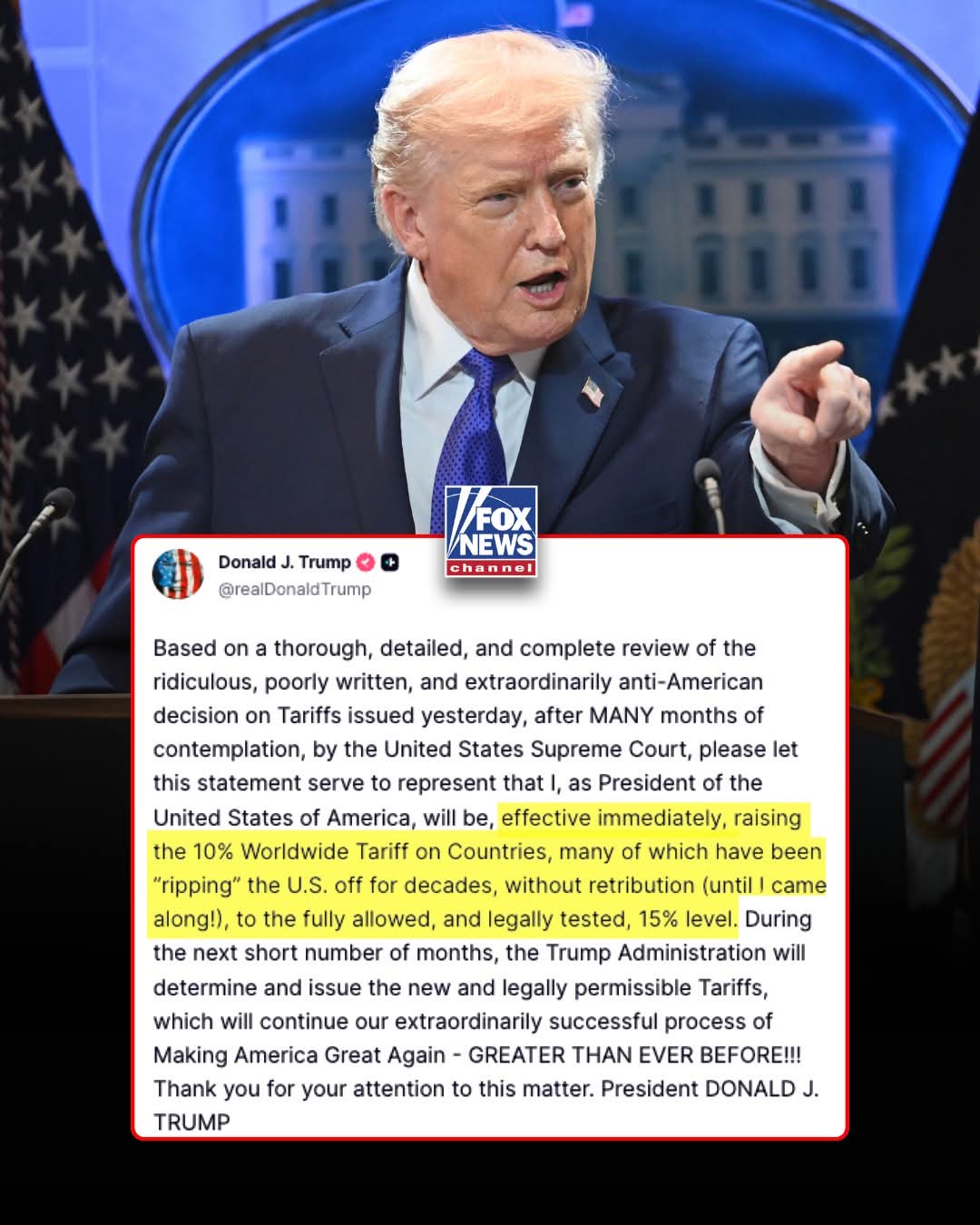
In a dramatic escalation of tensions between the executive branch and the judiciary, President Donald Trump announced he is increasing the existing 10% worldwide tariff to 15% “effective immediately,” following what he described as a “ridiculous” and “anti-American” decision from the Supreme Court of the United States on trade policy.
The move marks a significant shift in U.S. trade strategy — and signals a direct confrontation between the White House and the nation’s highest court.
🔥 What Triggered the Decision?
According to President Trump, the tariff hike is a response to a Supreme Court ruling that he argues undermines his authority to shape trade policy. While the Court’s specific reasoning has not yet been fully detailed in public statements, Trump framed the ruling as an overreach that interferes with executive powers over international commerce.
Calling the decision “anti-American,” the President positioned the tariff increase as both a policy correction and a political statement.
“This is about protecting American jobs and defending our sovereignty,” Trump said in remarks following the announcement.
💰 What the Tariff Increase Means
Raising the global tariff from 10% to 15% means that imported goods entering the United States will now face a higher baseline tax.
Potential Impacts:
Higher prices for consumers on imported goods
Increased costs for businesses reliant on foreign supply chains
Retaliatory trade measures from other countries
Short-term market volatility
Supporters argue the increase will:
Encourage domestic manufacturing
Strengthen American industry
Reduce trade deficits
Critics warn it could:
Accelerate inflation
Strain diplomatic relations
Disrupt global supply chains
⚖️ A Constitutional Power Struggle?
Trade authority in the United States sits at the intersection of Congress and the executive branch. While Congress has constitutional authority over tariffs, presidents have historically exercised broad discretion under delegated trade laws.
By tying the tariff increase directly to a Supreme Court ruling, Trump is elevating the matter beyond economics into a constitutional and political showdown.
Legal analysts suggest the move could invite further judicial scrutiny — potentially deepening tensions between the White House and the Court.
📉 Market & Global Reaction
Financial markets are expected to react sharply to the announcement. Global trading partners — particularly major exporters to the U.S. — may consider countermeasures.
If foreign governments respond with retaliatory tariffs, American exporters could face new barriers abroad, escalating into a broader trade dispute.
🗳️ Political Ramifications
The tariff increase is likely to energize both Trump’s supporters and critics.
Supporters see the move as decisive leadership against judicial interference and global economic pressures.
Opponents argue it reflects instability and could damage the U.S. economy.
With trade policy historically shaping election cycles, the decision may become a defining issue in upcoming political debates.
🚨 What Happens Next?
Key questions remain:
Will Congress intervene?
Will the Supreme Court respond?
How will global markets adjust?
Will trading partners retaliate?
One thing is certain: this announcement intensifies the ongoing battle over who controls America’s economic destiny.
As the dust settles, businesses, consumers, lawmakers, and foreign leaders alike will be watching closely.
The economic and political shockwaves may just be beginning.

Brent Just Fixed Prices at Historic Lows – WTI Shock Update Is Even More Devastating! Governments & Traders in Total Chaos!

King Charles III Confirmed Dead Following Secret Long Illness – Palace’s Unusual Silence Was a Desperate Cover-Up as Family Fought to Prepare the Succession!

Iran Accuses US & Israel of Starting War on Completely False Pretenses – “We Have Proof It Was All Lies!” Tehran Swears to Fight to the Death!

Trump Just Stopped the War and Dumped Iran onto Israel! “It’s Their Fight Now” – US Forces Pulling Back as Israel-Iran Bloodbath Begins! Leaked Statement Inside

SHOCKING BETRAYAL: Iran’s New “Leader” Mojtaba Fights for Life in Secret ICU – Gutted in Abdomen, Legs Mangled, Unaware War Rages or Family Was Massacred! Doctors Desperate as Regime Hides the Truth!

BREAKING REPORT: Concern After New Incident Involving Donald Trump While Boarding Air Force One

SHOCKING ENDGAME: Benjamin Netanyahu DEAD – Iran’s Elite Guard Corps Delivers Fatal Blow in Jerusalem Strike! Fate Sealed – No More Lies from Tel Aviv! See the Explosive Evidence

The Official Narrative: Death Confirmed, Successor Installed

🚨 INTERNET ERUPTS: Epstein Files Were Dominating Searches… Then Iran Strikes Hit and the Story Disappeared Overnight — What Just Happened?!

Victims Unleash Epstein’s Secret Name List with Jaw-Dropping Details & Viral Video – Why Hollywood & DC Are in Full Panic Mode Right Now! 😱

Special Counsel Jack Smith Releases Explosive Trump Dossier – Hidden Upload Sites Exposed, Sparking Panic in Trump Camp and Jordan’s Fierce Counterplot
