
NEWS
🔥 TRUMP VS. THE SUPREME COURT: The Truth Behind the “1000% Tariff” Claim

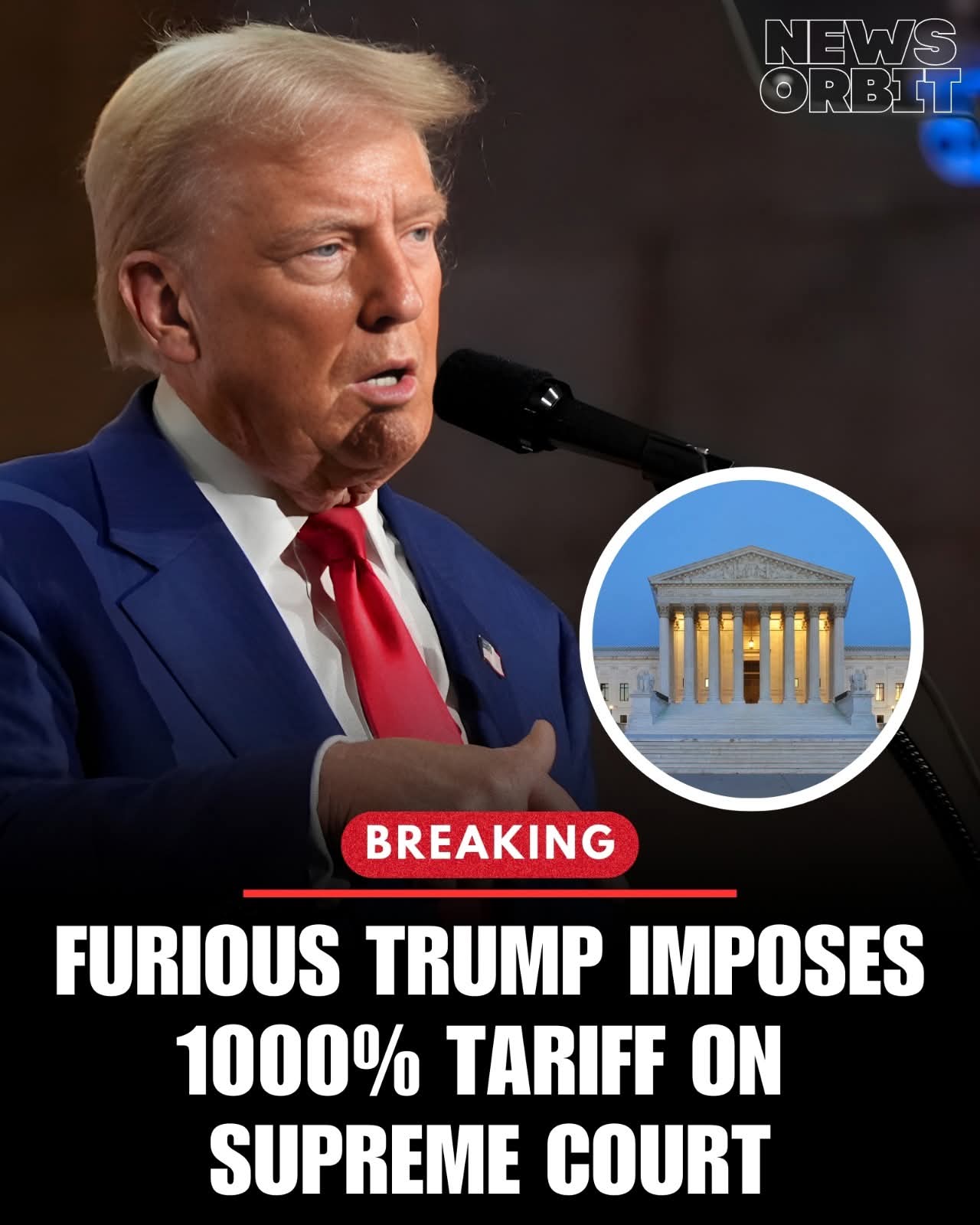
A viral political firestorm erupted online this week after posts began circulating claiming that former President Donald Trump had imposed a “1000% tariff” on the Supreme Court of the United States.
The claim spread fast.
The outrage spread faster.
But here’s the reality: there is no legal or constitutional mechanism that allows a U.S. president to levy tariffs on a judicial body.
💥 Why the Claim Makes No Legal Sense
Tariffs are trade tools. They are applied to imported goods and foreign commerce — typically under authority delegated to the executive branch for international trade regulation.
They are not taxes imposed on domestic institutions.
They are not tools used against federal courts.
And they are not mechanisms for settling political disputes between branches of government.
In short: A president cannot “tariff” the judiciary.
There is no executive order.
No White House announcement.
No filing from the U.S. Trade Representative.
No record from the Court.
⚖️ Where Did This Come From?
Legal analysts and constitutional scholars suggest the claim appears to be satire, exaggeration, or political commentary that was misinterpreted — or deliberately reframed — as fact.
In today’s digital ecosystem, sensational headlines often travel farther than corrections. When major institutions like the presidency and the Supreme Court are involved, engagement skyrockets — even if the underlying claim collapses under basic legal scrutiny.
🇺🇸 Executive vs. Judicial Tensions — But Not Like This
It’s true that tensions have existed between the executive branch and the Supreme Court over rulings related to presidential authority. That’s part of the constitutional system of checks and balances.
But disagreement is not the same as economic punishment.
And constitutional friction is not the same as trade policy.
🔎 The Bottom Line
There is no verified government announcement, no policy documentation, and no credible reporting supporting the claim that Trump imposed a “1000% tariff” on the Supreme Court.
The story is viral.
The narrative is dramatic.
But the legal foundation? Nonexistent.
In an era where headlines move markets and social media shapes perception, verifying before amplifying isn’t just smart — it’s necessary.
Before you share, ask:
Is it constitutional?
Is it documented?
Is it real?
Because not every explosive headline survives contact with the facts.

Brent Just Fixed Prices at Historic Lows – WTI Shock Update Is Even More Devastating! Governments & Traders in Total Chaos!

King Charles III Confirmed Dead Following Secret Long Illness – Palace’s Unusual Silence Was a Desperate Cover-Up as Family Fought to Prepare the Succession!

Iran Accuses US & Israel of Starting War on Completely False Pretenses – “We Have Proof It Was All Lies!” Tehran Swears to Fight to the Death!

Trump Just Stopped the War and Dumped Iran onto Israel! “It’s Their Fight Now” – US Forces Pulling Back as Israel-Iran Bloodbath Begins! Leaked Statement Inside

SHOCKING BETRAYAL: Iran’s New “Leader” Mojtaba Fights for Life in Secret ICU – Gutted in Abdomen, Legs Mangled, Unaware War Rages or Family Was Massacred! Doctors Desperate as Regime Hides the Truth!

BREAKING REPORT: Concern After New Incident Involving Donald Trump While Boarding Air Force One

SHOCKING ENDGAME: Benjamin Netanyahu DEAD – Iran’s Elite Guard Corps Delivers Fatal Blow in Jerusalem Strike! Fate Sealed – No More Lies from Tel Aviv! See the Explosive Evidence

The Official Narrative: Death Confirmed, Successor Installed

🚨 INTERNET ERUPTS: Epstein Files Were Dominating Searches… Then Iran Strikes Hit and the Story Disappeared Overnight — What Just Happened?!

Victims Unleash Epstein’s Secret Name List with Jaw-Dropping Details & Viral Video – Why Hollywood & DC Are in Full Panic Mode Right Now! 😱

Special Counsel Jack Smith Releases Explosive Trump Dossier – Hidden Upload Sites Exposed, Sparking Panic in Trump Camp and Jordan’s Fierce Counterplot
