
NEWS
NUCLEAR WAR FEARS ESCALATE GLOBALLY: North Korean Embassy in Tehran Reportedly Hit in U.S.-Israel Missile Barrage as Kim Jong Un Issues Stark Warning

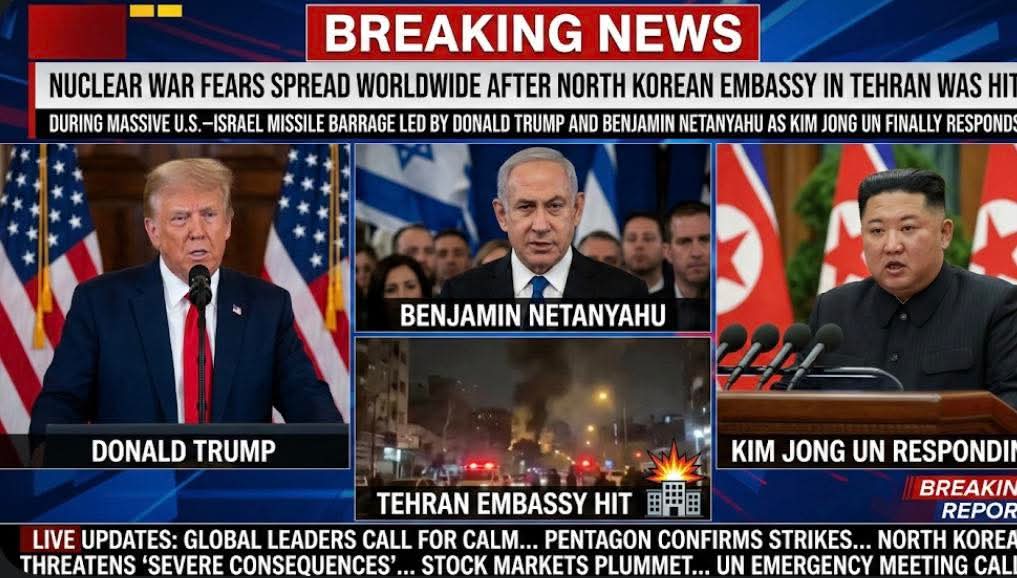
The ongoing U.S.-Israeli military campaign against Iran has taken a dangerous new turn, igniting widespread fears of a broader global conflict—including potential nuclear escalation—after reports emerged that the North Korean embassy in Tehran sustained damage during a massive missile strike wave led by President Donald Trump and Israeli Prime Minister Benjamin Netanyahu.
The incident, first circulating in social media and unverified online reports around March 6-7, 2026, alleges that collateral damage from the intensified bombardment of Iranian targets struck or affected the DPRK diplomatic mission in the Iranian capital. While no official confirmation has come from Pyongyang, Washington, or Jerusalem regarding direct targeting of the embassy, the claim has fueled panic amid the already volatile war that began with strikes on February 28, 2026, resulting in the reported death of Iran’s Supreme Leader Ayatollah Ali Khamenei and widespread destruction across Tehran and other sites.
North Korea’s response has been swift and sharp. Pyongyang’s Foreign Ministry issued a strongly worded condemnation through state media (KCNA), branding the U.S.-Israeli operation an “illegal act of aggression,” a “shameless rogue act,” and the “most despicable form of violation of sovereignty from A to Z.” The statement accused Washington and Tel Aviv of hegemonic ambitions and putting domestic laws above international norms. While North Korea has not explicitly mentioned the embassy incident in official releases, analysts note the timing aligns with growing concerns over North Korean personnel or assets in Iran—longstanding partners in military and technical cooperation.
Kim Jong Un has yet to deliver a personal televised address on the matter, but sources close to DPRK affairs interpret the elevated rhetoric as a clear signal of solidarity with Tehran. Pyongyang has historically viewed Iran as a key ideological and strategic ally against U.S. “imperialism,” with shared missile technology exchanges and mutual opposition to Western sanctions. Reports suggest North Korean technicians and advisors have been present in Iran for years, raising questions about potential casualties or risks to DPRK nationals.
The embassy damage rumor has amplified global anxiety over nuclear thresholds. Israel’s ambassador to Seoul explicitly linked the Iran strikes to “lessons” from the failure to halt North Korea’s nuclear program decades ago, stating the operation aims to prevent Tehran from achieving a similar breakout. This framing has stoked fears that Pyongyang could perceive the assault as a direct threat to its own survival, potentially accelerating missile tests or alliances (e.g., with Russia) in response.
Online, the story has exploded into viral territory: hashtags like #NuclearWar2026, #KimWarnsWorld, and #TehranEmbassyHit trend worldwide, with memes, unverified footage, and doomsday predictions spreading rapidly. Fact-checks have debunked some extreme claims (e.g., fabricated Kim quotes vowing direct intervention), but the underlying tension is real—North Korea’s arsenal of nuclear warheads and ICBMs remains a wildcard in any perceived existential threat.
The U.S. and Israel have not commented specifically on the embassy reports, focusing instead on continued operations to degrade Iran’s missile capabilities and proxies. CENTCOM confirms ongoing strikes, while Iran vows relentless retaliation against U.S. bases and interests.
As diplomatic channels freeze and missiles fly, the world watches Pyongyang’s next move. A direct North Korean escalation—whether rhetorical, military, or through proxies—could transform a regional war into a multi-front global crisis. With nuclear powers on both sides of the divide, the margin for error has never been narrower.
The clock is ticking. The fear is spreading. And Kim Jong Un’s silence speaks volumes louder than any statement yet. 🌍☢️

WŁAŚNIE OGŁOSILI! Zobacz więcej

Totalny wstrząs w sondażach! 🤯 Takich wyników jeszcze nie było. Zobacz 👇

Uuu…. Co się dzieje! 😱 @obserwujący⤵️⤵️

🚨 HE’S COMING HOME: The same former first-round draft pick who once electrified Rogers Place is eyeing a sensational return to the Edmonton Oilers — and the entire NHL world is already trembling! 🏒🔥 Full story via 👇

Ugandan-Born NYC Mayor Sues to Stop Trump From Blocking Welfare-Dependent Green Cards

Late-night host Jimmy Kimmel recently sparked a debate online after suggesting the Trump era will ultimately be remembered as one of the most shameful chapters in American history.

Trump says Zelenskyy must stop striking Russian diesel infrastructure because the attacks are contributing to fuel shortages.

Waldemar Żurek od ponad roku kieruje Ministerstwem Sprawiedliwości i pozostaje jedną z najbardziej wyrazistych postaci rządu.

Pierwsze 72 godziny są kluczowe ‼ Służby wyjaśniają, co należy zrobić ⬇

Czegoś podobnego nikt się nie spodziewał 😱😱👇

Wystarczył jeden oficjalny komunikat, by na Wyspach zapanowała przejmująca cisza… 💔🕯️
