
NEWS
IRAN’S DOUBLE GAME EXPOSED: “Sorry” Apology to Neighbors — Then BAM! Missiles Slam U.S. Bases Again! They Said Sorry One Hour Ago… Now They’re Promising NON-STOP Attacks! WWIII Just Got Real

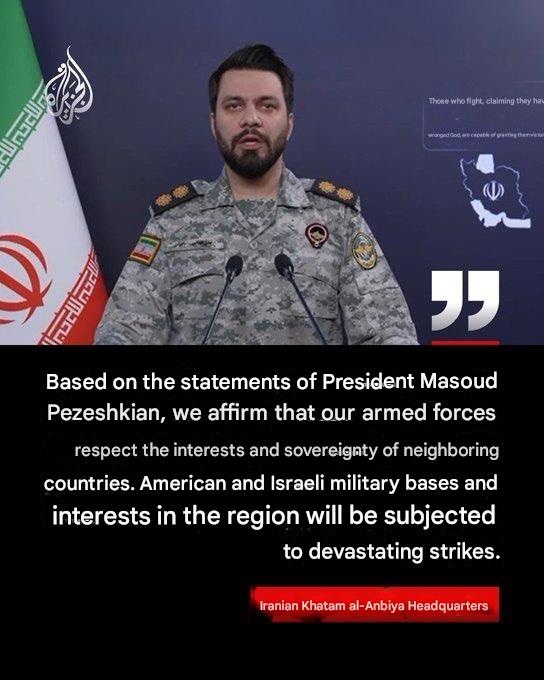
In a jaw-dropping display of diplomatic whiplash, Iranian leadership delivered what appeared to be a rare olive branch—only to snatch it back within the hour.
On March 6, 2026, Iran’s President publicly apologized to Gulf Arab states for the “unintended consequences” of recent military actions, insisting that Tehran’s strikes were aimed solely at American military installations and not intended to threaten regional neighbors. The statement, delivered during a carefully worded address to the nation and broadcast across state media, was framed as an effort to “preserve stability in the Persian Gulf” and “avoid escalation with brotherly Muslim countries.”
Gulf capitals from Riyadh to Abu Dhabi initially welcomed the remarks with cautious optimism. Diplomatic channels buzzed with hope that back-channel talks—facilitated quietly by Oman and Qatar—might finally de-escalate the spiraling crisis that has seen Iranian drones, ballistic missiles, and cruise missiles target U.S. bases across Iraq, Syria, Jordan, and the UAE since early February.
That hope lasted exactly 57 minutes.
At approximately 19:47 local time, U.S. Central Command (CENTCOM) confirmed that multiple Iranian Shahed-136 drones had penetrated Jordanian airspace and struck Al-Tanf garrison, a key U.S. outpost near the Syria-Iraq-Jordan border. Less than 30 minutes later, explosions rocked Al Asad Airbase in western Iraq—another longstanding American facility—after a barrage of short-range ballistic missiles. Eyewitness reports and social media footage showed bright flashes and secondary detonations lighting up the night sky.
By 21:15, the Islamic Revolutionary Guard Corps (IRGC) issued its own chilling clarification via Telegram and state-affiliated channels:
“The Islamic Republic’s apology was directed only toward the honorable nations of the region. The criminal U.S. occupiers remain legitimate targets. Our response will continue without interruption until the last American soldier leaves our lands and the lands of our allies.”
The IRGC statement left no room for ambiguity: attacks on U.S. bases “will not cease” and would intensify if American forces did not withdraw from Iraq, Syria, and the Gulf within an unspecified “reasonable timeframe.”
U.S. officials wasted no time responding. A senior Pentagon spokesperson called the sequence “a blatant act of deception and aggression,” while anonymous sources within the Biden administration described the apology as “classic Iranian taqiyya”—a term referring to religiously sanctioned dissimulation to protect the faith or state. Defense Secretary Lloyd Austin was reportedly pulled into an emergency secure video conference with President Biden, CENTCOM Commander Gen. Michael Kurilla, and key allies in the region.
The rapid reversal has ignited panic across the Middle East. Oil prices spiked more than 7% in after-hours trading as traders priced in the risk of wider conflict. Commercial shipping through the Strait of Hormuz slowed dramatically, with several major tanker operators rerouting vessels away from the Gulf. Airlines canceled or diverted flights over Iraq, Jordan, and parts of the Arabian Peninsula.
Analysts warn that Iran’s dual messaging—apology to Arabs, unrelenting war on Americans—may be a calculated strategy to fracture the emerging anti-Iran coalition. By reassuring Gulf states that they are not the primary target, Tehran hopes to neutralize Saudi Arabia, the UAE, and Bahrain’s willingness to openly support U.S. retaliation. Yet the fresh strikes on Al-Tanf and Al Asad have already undermined that gambit, leaving regional leaders furious and deeply distrustful.
Social media is ablaze with apocalyptic memes and hashtags: #WW3Started, #IranLiedAgain, #BasesUnderFire. Veteran Middle East watchers are drawing dark parallels to the prelude of past regional wars—miscalculation, deception, and tit-for-tat escalation that spirals beyond anyone’s control.
As U.S. forces go to heightened alert across more than a dozen bases in the region, one question dominates secure briefings in Washington, Tel Aviv, Riyadh, and Tehran alike: how much longer can this game of brinkmanship continue before someone crosses the final red line?
The apology lasted less than an hour.
The missiles are still flying.
And the world is watching—breath held—for what comes next.

Brent Just Fixed Prices at Historic Lows – WTI Shock Update Is Even More Devastating! Governments & Traders in Total Chaos!

King Charles III Confirmed Dead Following Secret Long Illness – Palace’s Unusual Silence Was a Desperate Cover-Up as Family Fought to Prepare the Succession!

Iran Accuses US & Israel of Starting War on Completely False Pretenses – “We Have Proof It Was All Lies!” Tehran Swears to Fight to the Death!

Trump Just Stopped the War and Dumped Iran onto Israel! “It’s Their Fight Now” – US Forces Pulling Back as Israel-Iran Bloodbath Begins! Leaked Statement Inside

SHOCKING BETRAYAL: Iran’s New “Leader” Mojtaba Fights for Life in Secret ICU – Gutted in Abdomen, Legs Mangled, Unaware War Rages or Family Was Massacred! Doctors Desperate as Regime Hides the Truth!

BREAKING REPORT: Concern After New Incident Involving Donald Trump While Boarding Air Force One

SHOCKING ENDGAME: Benjamin Netanyahu DEAD – Iran’s Elite Guard Corps Delivers Fatal Blow in Jerusalem Strike! Fate Sealed – No More Lies from Tel Aviv! See the Explosive Evidence

The Official Narrative: Death Confirmed, Successor Installed

🚨 INTERNET ERUPTS: Epstein Files Were Dominating Searches… Then Iran Strikes Hit and the Story Disappeared Overnight — What Just Happened?!

Victims Unleash Epstein’s Secret Name List with Jaw-Dropping Details & Viral Video – Why Hollywood & DC Are in Full Panic Mode Right Now! 😱

Special Counsel Jack Smith Releases Explosive Trump Dossier – Hidden Upload Sites Exposed, Sparking Panic in Trump Camp and Jordan’s Fierce Counterplot
