
NEWS
JUST IN: World War III Fears Explode as Iran War Spirals Into Unpredictable Chaos After Russian and Chinese Military Aid Reportedly Arrives in Tehran Despite Trump’s Warnings

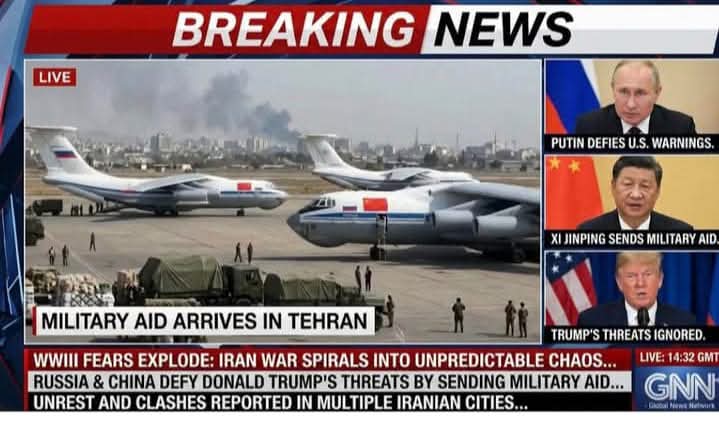
The escalating U.S.-Israeli war against Iran has plunged the globe into heightened alarm, with fresh reports claiming military aid from Russia and China has reached Tehran—directly defying President Donald Trump’s explicit threats against foreign intervention. As the conflict enters its second week on March 8, 2026, fears of a broader global confrontation—potentially spiraling into World War III—are surging across headlines, social media, and diplomatic channels.
The war erupted on February 28 when joint U.S.-Israeli airstrikes, dubbed Operation Epic Fury (or Roaring Lion in some reports), targeted Iranian nuclear sites, missile infrastructure, and leadership compounds in Tehran. The strikes killed Supreme Leader Ayatollah Ali Khamenei, decapitating the regime’s top echelon and triggering massive Iranian missile and drone retaliations against U.S. bases, Israel, and Gulf allies including Saudi Arabia, Jordan, and Qatar. Casualties have climbed into the thousands, oil prices are volatile, and regional airspace remains disrupted.
Now, intelligence leaks and media reports indicate Russia has provided targeting data on U.S. warships and aircraft in the Middle East, while China weighs financial aid, spare parts, and missile components. Kremlin denials are vague, with spokespeople insisting no formal requests came from Tehran, yet U.S. officials describe a “comprehensive effort” to bolster Iran’s defenses. Beijing, reliant on Iranian oil, has urged safe passage through the Strait of Hormuz but faces accusations of indirect escalation.
Trump has repeatedly warned adversaries against aiding Iran, demanding “unconditional surrender” and vowing no deals short of regime capitulation. In recent rallies and Truth Social posts, he dismissed Russia and China as “not really a factor” while boasting of sinking much of Iran’s navy and dominating the skies. Yet the reported aid arrivals in Tehran suggest defiance, raising the specter of proxy escalation or direct great-power involvement.
Analysts warn this could drag in NATO allies (via U.S. commitments), embolden North Korea, or fracture global energy markets. European leaders express concern over munitions shortages diverting from Ukraine defenses, while Pacific partners fear weakened deterrence against China. Public opinion polls show growing anxiety, with many viewing the conflict as a potential gateway to worldwide war.
As strikes intensify and diplomacy falters, the world watches Tehran amid smoke and uncertainty: Is this contained regime-change, or the unpredictable flashpoint that ignites something far larger? With superpowers testing red lines, the chaos shows no signs of slowing.

Brent Just Fixed Prices at Historic Lows – WTI Shock Update Is Even More Devastating! Governments & Traders in Total Chaos!

King Charles III Confirmed Dead Following Secret Long Illness – Palace’s Unusual Silence Was a Desperate Cover-Up as Family Fought to Prepare the Succession!

Iran Accuses US & Israel of Starting War on Completely False Pretenses – “We Have Proof It Was All Lies!” Tehran Swears to Fight to the Death!

Trump Just Stopped the War and Dumped Iran onto Israel! “It’s Their Fight Now” – US Forces Pulling Back as Israel-Iran Bloodbath Begins! Leaked Statement Inside

SHOCKING BETRAYAL: Iran’s New “Leader” Mojtaba Fights for Life in Secret ICU – Gutted in Abdomen, Legs Mangled, Unaware War Rages or Family Was Massacred! Doctors Desperate as Regime Hides the Truth!

BREAKING REPORT: Concern After New Incident Involving Donald Trump While Boarding Air Force One

SHOCKING ENDGAME: Benjamin Netanyahu DEAD – Iran’s Elite Guard Corps Delivers Fatal Blow in Jerusalem Strike! Fate Sealed – No More Lies from Tel Aviv! See the Explosive Evidence

The Official Narrative: Death Confirmed, Successor Installed

🚨 INTERNET ERUPTS: Epstein Files Were Dominating Searches… Then Iran Strikes Hit and the Story Disappeared Overnight — What Just Happened?!

Victims Unleash Epstein’s Secret Name List with Jaw-Dropping Details & Viral Video – Why Hollywood & DC Are in Full Panic Mode Right Now! 😱

Special Counsel Jack Smith Releases Explosive Trump Dossier – Hidden Upload Sites Exposed, Sparking Panic in Trump Camp and Jordan’s Fierce Counterplot
