
NEWS
Russia Announces Immediate Deployment of 50 Fighter Jets and 20,000 Troops to Support Iran After U.S.–Israel Strike Led by Donald Trump and Benjamin Netanyahu

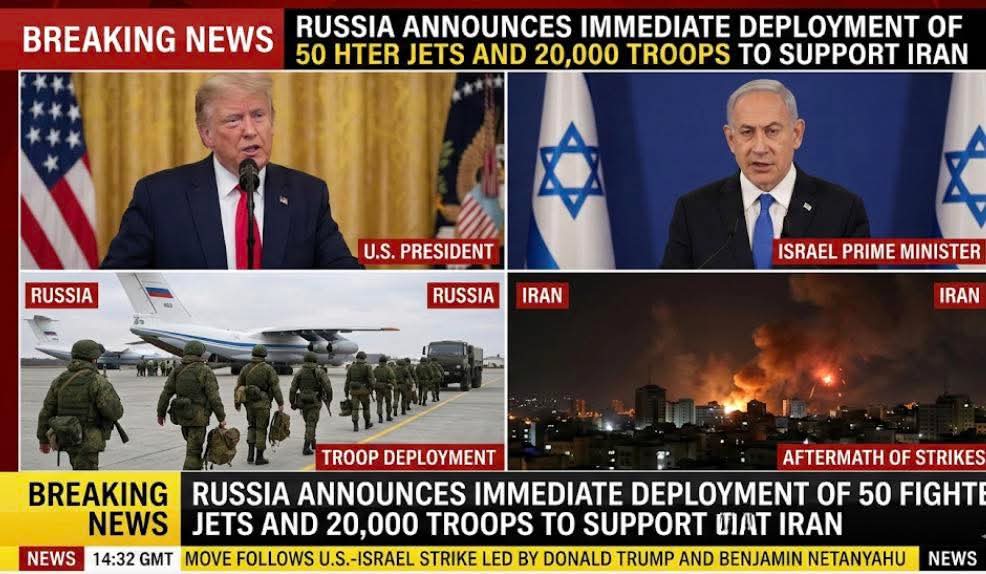
In a stunning escalation that has jolted global powers and ignited fears of a wider conflict, Russia has declared it is immediately deploying 50 advanced fighter jets and 20,000 ground troops to bolster Iran’s defenses following the devastating U.S.-Israeli airstrikes that killed Supreme Leader Ayatollah Ali Khamenei and crippled key military infrastructure.
The announcement came from the Kremlin late on March 8, 2026, just days into the ongoing war launched on February 28 under Operation Epic Fury (or Roaring Lion), a coordinated campaign by President Donald Trump and Israeli Prime Minister Benjamin Netanyahu aimed at regime change and neutralizing Iran’s nuclear and missile threats. Russian President Vladimir Putin, in a televised address, condemned the strikes as “barbaric aggression” and vowed to “stand shoulder-to-shoulder with our strategic partner Iran” against what Moscow calls an illegal invasion.
According to Kremlin statements, the deployment includes Sukhoi Su-35 and MiG-35 fighters—capable of air superiority and ground attack roles—along with elite airborne and motorized rifle units equipped for rapid response. Troops are reportedly en route via airlift from southern Russia, with initial elements expected to arrive in Tehran and key airbases within 48-72 hours. The move follows weeks of deepening Russia-Iran military ties, including joint exercises and arms transfers, but marks the first direct troop commitment since the conflict began.
U.S. officials reacted with fury. President Trump blasted the announcement on Truth Social as “a grave mistake” and warned Russia against “crossing red lines,” reiterating his demand for Iran’s unconditional surrender. “If Putin thinks he can prop up a failing regime with jets and boots, he’ll regret it bigly,” Trump posted. Pentagon sources confirmed heightened alerts for U.S. forces in the region, with carrier strike groups repositioning to counter potential threats.
Israel’s Netanyahu, in a late-night briefing, called the Russian deployment “a dangerous provocation” and signaled more strikes on Iranian targets, vowing to prevent any foreign power from turning Iran into a fortified proxy base.
The deployment comes amid reports of Russia already sharing intelligence on U.S. asset locations to aid Iranian retaliatory strikes, though the Kremlin denies directing attacks. Analysts warn this could transform the conflict into a proxy showdown between superpowers, risking direct NATO-Russia clashes or disruptions to global energy supplies via the Strait of Hormuz.
As fighter jets reportedly lift off from Russian bases and troop transports mobilize, the world braces for what could be the most perilous phase yet. Diplomacy hangs by a thread—will this show of force deter further U.S.-Israeli advances, or ignite the powder keg into full-scale global war?

Brent Just Fixed Prices at Historic Lows – WTI Shock Update Is Even More Devastating! Governments & Traders in Total Chaos!

King Charles III Confirmed Dead Following Secret Long Illness – Palace’s Unusual Silence Was a Desperate Cover-Up as Family Fought to Prepare the Succession!

Iran Accuses US & Israel of Starting War on Completely False Pretenses – “We Have Proof It Was All Lies!” Tehran Swears to Fight to the Death!

Trump Just Stopped the War and Dumped Iran onto Israel! “It’s Their Fight Now” – US Forces Pulling Back as Israel-Iran Bloodbath Begins! Leaked Statement Inside

SHOCKING BETRAYAL: Iran’s New “Leader” Mojtaba Fights for Life in Secret ICU – Gutted in Abdomen, Legs Mangled, Unaware War Rages or Family Was Massacred! Doctors Desperate as Regime Hides the Truth!

BREAKING REPORT: Concern After New Incident Involving Donald Trump While Boarding Air Force One

SHOCKING ENDGAME: Benjamin Netanyahu DEAD – Iran’s Elite Guard Corps Delivers Fatal Blow in Jerusalem Strike! Fate Sealed – No More Lies from Tel Aviv! See the Explosive Evidence

The Official Narrative: Death Confirmed, Successor Installed

🚨 INTERNET ERUPTS: Epstein Files Were Dominating Searches… Then Iran Strikes Hit and the Story Disappeared Overnight — What Just Happened?!

Victims Unleash Epstein’s Secret Name List with Jaw-Dropping Details & Viral Video – Why Hollywood & DC Are in Full Panic Mode Right Now! 😱

Special Counsel Jack Smith Releases Explosive Trump Dossier – Hidden Upload Sites Exposed, Sparking Panic in Trump Camp and Jordan’s Fierce Counterplot
