
NFL
🚨 Iran’s Strait of Hormuz Warning Raises Global Alarm: Could the World Face Another Major Economic Shock?

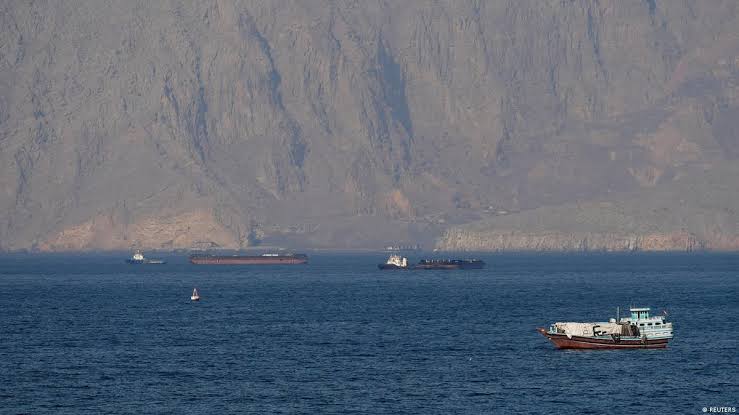
🚨 Iran’s Strait of Hormuz Warning Raises Global Alarm: Could the World Face Another Major Economic Shock?
The world is watching the Middle East with growing concern as tensions surrounding Iran and the strategically important Strait of Hormuz continue to threaten international shipping, energy markets, and regional security. What happens in this narrow stretch of water has consequences far beyond the countries surrounding it, affecting oil-importing nations, shipping companies, businesses, and ordinary consumers around the globe.
The situation is particularly serious because the Strait of Hormuz is one of the world’s most important maritime chokepoints. Any major restriction on commercial vessels passing through the waterway can disrupt the movement of energy supplies and place additional pressure on an already vulnerable global economy.
Iran has repeatedly threatened to restrict or close the strait amid its confrontation with the United States and other regional actors. Recent reports have described continuing restrictions, warnings to vessels, and increasing security risks for ships attempting to navigate the area. These developments have intensified concerns about what could happen if maritime traffic becomes even more severely disrupted.
But there is an important distinction: an announcement that a waterway is closed does not automatically mean every vessel has stopped moving through it. The actual situation at sea, including which routes remain accessible and what security arrangements are operating, must be assessed using reliable maritime reporting.
WHY THE STRAIT OF HORMUZ MATTERS SO MUCH
To understand why the latest developments have attracted international attention, it is necessary to understand the importance of the Strait of Hormuz.
Located between Iran and Oman, the strait connects the Persian Gulf with the Gulf of Oman and the wider Arabian Sea. It provides a critical route for oil and other energy products exported by major producers in the Persian Gulf.
For decades, the waterway has played a central role in the international energy system. Oil-producing countries rely on it to reach customers in Asia and other parts of the world, while importing nations depend on uninterrupted shipping to maintain reliable supplies.
That makes the strait much more than a regional shipping lane. It is a vital link in the global economy.
When threats emerge against commercial shipping in the area, governments, energy companies, investors, and maritime security organizations pay close attention.
A prolonged interruption could force shipping companies to reconsider their routes, increase insurance costs, and create delays in the delivery of important commodities.
The consequences would depend on the severity and duration of the disruption, the number of vessels able to pass safely, and the availability of alternative supply routes.
IRAN’S WARNING PUTS SHIPPING COMPANIES ON ALERT
Iran has used its strategic position near the Strait of Hormuz as a source of leverage during periods of confrontation with Washington and other countries.
In the current crisis, Iranian officials have continued to link the security and operation of the waterway to the broader dispute with the United States.
On October 16, reports indicated that an Iranian army spokesman said the strait would reopen if the United States left the Middle East, adding to uncertainty surrounding the future of commercial navigation.
Meanwhile, maritime security reporting has highlighted the danger facing vessels operating in the area, including attacks and warnings that have made some shipping companies increasingly cautious.
These developments create a difficult situation for commercial operators.
A shipping company must consider not only the cost of transporting cargo but also the safety of its crew, the security of its vessel, insurance requirements, and the possibility of delays or damage.
If the risk becomes too great, operators may decide to postpone voyages or seek alternative arrangements.
Even when a waterway remains technically navigable, elevated security risks can reduce traffic and make transportation more expensive.
For crews aboard oil tankers, container ships, and other commercial vessels, these are not simply political developments. They are practical questions involving personal safety and the safe delivery of cargo.
COULD OIL PRICES RISE AGAIN?
One of the biggest questions surrounding the crisis is what it could mean for global oil prices.
Oil markets respond to both actual disruptions and expectations about future supply. When traders fear that a major export route could become inaccessible, prices can react before a complete interruption takes place.
The reason is straightforward: buyers and sellers must account for the possibility that fewer barrels will reach the market or that deliveries will become more expensive.
If shipments through the Strait of Hormuz decline significantly, importers may need to seek supplies from other producers, draw on available inventories, or adjust their purchasing strategies.
Those responses can involve additional costs.
However, an increase in oil prices is not guaranteed every time tensions rise. Prices also depend on global demand, available production, inventories, government policies, and expectations about how quickly the crisis might be resolved.
A temporary disruption could produce a different market reaction from a prolonged closure accompanied by attacks on commercial vessels.
The duration of the disruption is therefore just as important as the initial announcement.
For countries that rely heavily on imported petroleum products, sustained increases in international prices can create additional economic pressure.
WHAT THIS COULD MEAN FOR ORDINARY PEOPLE
Although the crisis is unfolding thousands of kilometres away from many consumers, its consequences could reach households around the world.
Higher energy costs can increase the expense of transporting goods, operating businesses, and producing certain industrial materials.
If fuel prices rise and remain elevated, transport operators may face higher operating expenses. Some businesses could eventually pass a portion of those costs on to customers.
The effects would vary from country to country.
Nations that import large quantities of refined petroleum products may be particularly exposed to changes in international energy prices. Countries with domestic production, strategic reserves, or alternative suppliers may be better positioned to absorb some of the pressure.
For consumers, the most important question is whether any disruption becomes prolonged enough to affect prices and the availability of essential goods.
It would be premature to claim that a new global economic crisis is inevitable. Nevertheless, the possibility of sustained disruption to such an important energy route is a serious concern for governments and businesses.
THE UNITED STATES AND IRAN FACE A DANGEROUS CHOICE
The situation also raises difficult questions for the United States and Iran.
Washington has an interest in protecting maritime security and maintaining the flow of international commerce. Tehran, meanwhile, has sought to use its position and restrictions around the strait as leverage in its confrontation with the United States.
The danger is that competing efforts to establish control or deter the other side could increase the risk of a wider confrontation.
A miscalculation involving a naval vessel, a commercial tanker, or a military operation could create pressure for retaliation.
That is why diplomatic communication and clear rules for maritime navigation are important even when relations between governments are severely strained.
Military pressure may be intended to deter an opponent, but it can also increase uncertainty and create opportunities for misunderstandings.
For countries that depend on the safe movement of goods through the region, the priority is to prevent the dispute from escalating into a more dangerous conflict.
Diplomatic negotiations, maritime coordination, and reliable information about conditions at sea could all play important roles in reducing the risk.
WHAT HAPPENS NEXT?
Several developments will help determine how serious the situation becomes.
First, observers will be watching for any official announcement that changes the restrictions affecting commercial vessels.
Second, maritime tracking and security reports will be important for establishing whether ships are continuing to transit the waterway, whether traffic is declining, and which routes remain accessible.
Third, oil markets will react to new information about supplies, shipping costs, and the likelihood of a prolonged disruption.
Finally, diplomatic developments between Iran and the United States could influence whether tensions increase or a path toward a negotiated arrangement becomes possible.
These factors are connected. A reduction in military tensions could encourage shipping companies to resume normal operations, while further attacks or threats could make operators even more cautious.
It is also important to distinguish confirmed developments from rumours circulating on social media. A dramatic headline can spread rapidly, but the details of a maritime announcement may be more complicated than a single sentence suggests.
Readers should look for confirmation from credible news organizations and maritime authorities before concluding that all commercial traffic has stopped.
THE WORLD CANNOT AFFORD TO IGNORE THE WARNING SIGNS
The Strait of Hormuz crisis demonstrates how events in one strategically important region can influence the international economy.
A narrow waterway can become a central issue in global diplomacy because of the enormous volume of energy and other goods that depend on safe passage through it.
For governments, the challenge is to protect commercial navigation without allowing the confrontation to spiral into a broader conflict.
For shipping companies, the immediate priority is protecting vessels and crews while determining whether voyages can be completed safely.
For consumers and businesses, the concern is whether continued disruption will lead to higher costs and greater economic uncertainty.
There are still important questions about how the situation will develop, how long restrictions may last, and whether diplomatic efforts can reduce the risks.
One thing is clear: the Strait of Hormuz remains a critical pressure point in the confrontation involving Iran, the United States, and regional security.
The coming developments could influence shipping decisions, energy markets, and international relations for weeks or months.
What do you think should happen next? Should the international community focus on diplomatic negotiations to restore safe passage, or should governments take stronger measures to protect commercial shipping?
Share your opinion in the comments, and share this article with others who want to understand why the Strait of Hormuz matters to the global economy.

BREAKING: POPE LEO XIV DISCHARGED FROM HOSPITAL FOUR DAYS AFTER LUNG CANCER SURGERY — HERE’S WHAT WE KNOW!

🚨🔥 PEDRO NETO ON FIRE! CHELSEA SECURE THEIR SECOND WIN IN A ROW AS THE BLUES SEND A STRONG MESSAGE! 💙⚽

💎 BREAKING: A RARE PINK DIAMOND GOES ON DISPLAY IN FRANCE 100 YEARS AFTER AN AMATEUR HEIST — THE EXTRAORDINARY STORY THAT HAS EVERYONE TALKING! 🇫🇷✨

🚨🎤 TAYLOR SWIFT IS ABOUT TO REACH A MASSIVE CAREER MILESTONE — AND FANS WANT ONE THING: A SPECIAL INTERVIEW! 😭❤️🔥

🚨 BREAKING: “2030 WILL BE THE END OF MY PRESIDENCY, IF I LIVE THAT LONG” — EGYPT’S EL-SISI MAKES A MAJOR ANNOUNCEMENT THAT HAS THE WORLD WATCHING! 🇪🇬🔥

🚨 BREAKING: DEADLY HOUTHI ATTACKS ON TAIZ LEAVE THREE CIVILIANS DEAD AND FIVE INJURED — YEMEN’S HUMANITARIAN CRISIS DEEPENS

🚨 BREAKING: Iran’s Alleged Seizure of an Israeli Cargo Ship Sparks Global Alarm — Could This Trigger a Dangerous New Escalation? 🇮🇷🇮🇱🔥

🚨 Iran’s Strait of Hormuz Warning Raises Global Alarm: Could the World Face Another Major Economic Shock?

🚨 WHITE HOUSE SHAKE-UP? Katie Zacharia’s First Briefing Sparks Questions as Resignation Claims Circulate — Here’s What Everyone Needs to Know! 🇺🇸🔥

🚨 BREAKING: Josh Jacobs Could Be Set for a Packers Return in Week 7 — But There’s a Major Catch That Fans Need to Know! 🏈🔥

🚨 BREAKING: CALEB WILLIAMS OFFICIALLY LISTED AS QUESTIONABLE FOR SUNDAY’S GAME! 😳🏈
