
CELEBRITY
🚨China’s Hidden Role in Hormuz Explained — Why the U.S. Could Not Stop Iran? Iran shuts Strait of Hormuz again : strict control enforced within hours over U.S. blockade dispute Iranian military authorities have reimposed strict control over the Strait of Hormuz, effectively shutting it down again within hours, less than 24 hours after signs of a possible reopening.

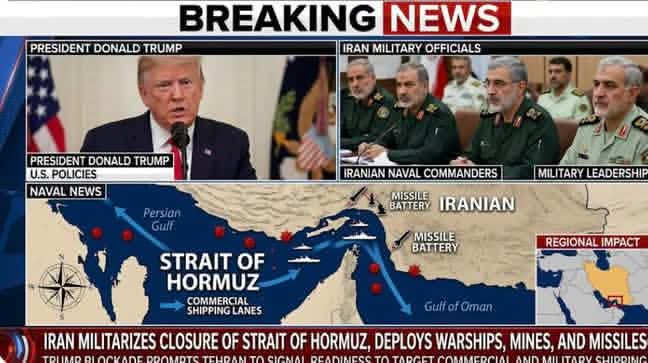
🚨China’s Hidden Role in Hormuz Explained — Why the U.S. Could Not Stop Iran?
Iran shuts Strait of Hormuz again : strict control enforced within hours over U.S. blockade dispute
Iranian military authorities have reimposed strict control over the Strait of Hormuz, effectively shutting it down again within hours, less than 24 hours after signs of a possible reopening.
The move comes as Iran accuses the United States of violating understandings by continuing maritime blockade measures against Iranian ports. Officials stated the strait has “returned to its previous status” under tight military control, with navigation heavily restricted unless conditions change.
According to Iranian commanders, the closure is directly tied to ongoing U.S. pressure, as Donald Trump confirmed that blockade operations will continue in full until a broader agreement — particularly on nuclear issues — is reached.
The rapid reversal follows a brief window of optimism after ceasefire talks, but quickly shifted back to escalation as Tehran warned it would not allow free passage while its own ports remain restricted.
Shipping activity is now limited to routes approved by Iranian forces, while United States Central Command reported that at least 21 vessels have already been forced to reroute since the blockade began.
The situation significantly raises the risk of a global energy disruption, with the Strait of Hormuz once again becoming a central pressure point in the standoff between Iran and the United States.
The core argument is that the U.S. didn’t actually “win” against Iran despite military pressure. Even after weeks of bombing, sanctions, and a naval blockade, Iran reopened the Strait of Hormuz on its own terms—showing it still had control.
The reason, according to this analysis, is China. For years, China has quietly built an economic system that helps countries like Iran bypass U.S. sanctions. This includes buying Iranian oil through indirect channels, paying in Chinese currency instead of dollars, and using untraceable shipping networks. On top of that, China stockpiled massive oil reserves, reducing the global pressure that sanctions were supposed to create.
Because of this support, Iran’s economy didn’t collapse, and it wasn’t forced into submission. Instead, it negotiated from a position of strength.
The bigger takeaway: U.S. sanctions and economic pressure may be losing effectiveness when countries have strong ties with China. This could reshape global power in the coming years.

Just In: 🇮🇷🇺🇸”We Will Not Surrender” — Iran Rejects America’s Nuclear Ultimatum.

Just In: Trapdoor creaks for dollar if Iran war ends.

Breaking News:Iran’s two-tier internet access fuels anger and exposes cracks in the regime.

🚨 “World on Edge: Iran Claims New ‘Nuke-Like’ Weapon Can Rain 800 Bombs at Once”

Florida Draws the Line: Political Earthquake Erupts as State Pushes Back Against Washington.

Just In: No More Delays: Trump Draws the Line as Military Countdown Enters Final 24 Hours.

Breaking: One Signature Away From Crisis: Trump’s Iran Talks Leave Netanyahu Facing a Military Countdown.

Breaking: Trump told Netanyahu — no compromise on Iranian uranium. But the deal actually being negotiated allows Iran to enrich again after 12 years. Israel’s IDF sees a window to strike right now.

BREAKING: Tṙump White House fires back at criticism of immigration policies — Taylor Swift’s 13-word response steals the spotlight”

BREAKING: 🚨 Global superstar Taylor Swift has ignited fresh political debate after openly criticizing former U.S. President Donald Trump during a televised appearance. Swift described Trump as unfit for office, accusing him of pushing Americans toward “horrid decisions they never signed up for” and harming the nation’s stability. READ MORE:

BREAKING: JASON KELCE BREAKS HIS SILENCE ON LIVE TELEVISION: CALLS T.R.U.M.P “A VICIOUS OLD BASTARD DRAINING AMERICA’S SOUL” AFTER THE BORN-IN-AMERICA ACT Full story below👇👇👇
