NEWS
Iranian Hackers Leak Doctored Images of Donald Trump With Jeffrey Epstein in Retaliation for U.S.-Israel Strike That Killed Supreme Leader

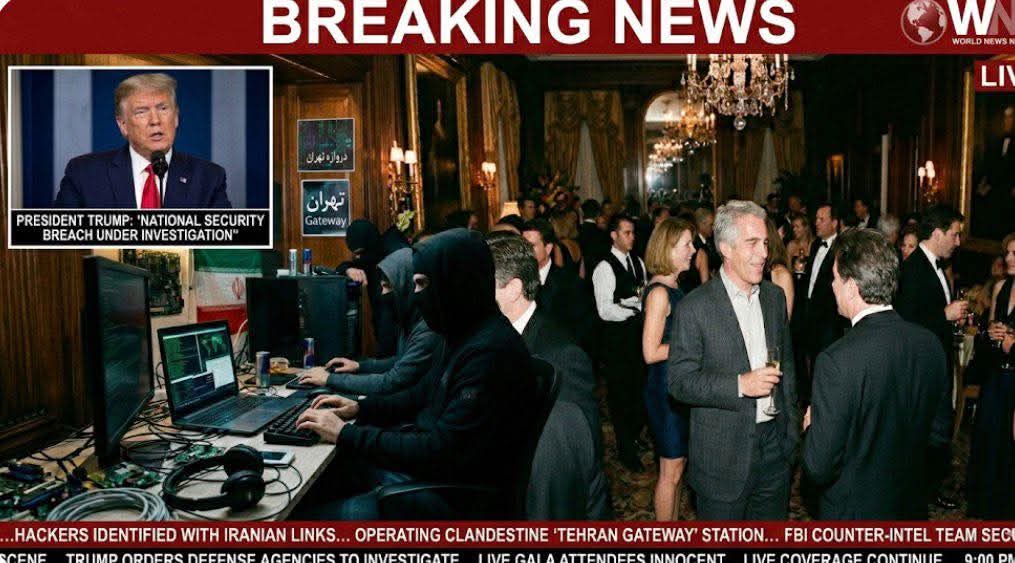
In a dramatic cyber retaliation following the reported death of Iran’s Supreme Leader Ayatollah Ali Khamenei in a U.S.-Israeli airstrike earlier this week, a group claiming affiliation with Iranian state-backed hackers has released a series of manipulated images purporting to show former U.S. President Donald Trump in the company of convicted sex offender Jeffrey Epstein.
The leak, posted across several dark-web forums and quickly mirrored on Telegram channels linked to IRGC-affiliated cyber units, includes at least seven high-resolution photographs. All images appear to have been digitally altered: Trump’s face has been superimposed onto bodies in existing Epstein-related photos from the early 2000s, including poolside shots at Epstein’s Palm Beach residence and aboard his private jet. No minors appear in any of the circulated images.
The accompanying message, written in both Persian and broken English, reads in part: “America and the Zionist regime murdered our Supreme Leader. Now the world sees the true face of their puppet Trump. These are only the beginning. More files coming.” The post is signed by a previously unknown handle “ShadowFalcon-IR,” which security researchers believe is a fresh alias for the same actors behind past “Pay2Key” and “Charming Kitten” campaigns.
Cybersecurity firms including Mandiant and CrowdStrike have already classified the images as “crudely photoshopped” based on metadata inconsistencies, lighting mismatches, and visible compositing artifacts around Trump’s head and shoulders. One forensic analyst told Reuters on background: “This is amateur-hour level editing—meant more for propaganda shock value than credible blackmail.”
The White House issued a brief statement calling the leak “a desperate and predictable Iranian disinformation operation” and reiterated that the strike on Khamenei was a “targeted defensive action” in response to escalating proxy attacks on U.S. forces. President Trump, speaking at a rally in Ohio hours after the images surfaced, dismissed them outright: “Fake news 2.0. They tried this before, they’ll try it again. Sad!”
Social media platforms scrambled to remove the photos under coordinated content-moderation alerts, though screenshots and mirrors continue to circulate. Intelligence sources say the leak fits a broader Iranian pattern of “influence operations” aimed at sowing domestic division in the United States ahead of any potential further military escalation.
While the images themselves carry no evidentiary weight, analysts warn the psychological impact could still amplify existing conspiracy narratives online. For now, the operation appears more theatrical than substantive—but in the current high-tension environment, even crude fakes can travel fast.


Cała Polska śledziła jej ciążę, właśnie urodziła! Zaraz po porodzie pokazała zdjęcia z porodówki

SZOKUJĄCE: AKTORKA JOANNA SZCZEPKOWSKA OSTRO OBRAŻA PREZYDENTA KAROLA NAWROCKIEGO! 😱😱 Ogromna fala oburzenia zalała całą Polskę! Ostre, wręcz bezwzględne słowa doświadczonej aktorki Joanny Szczepkowskiej wymierzone w prezydenta Karola Nawrockiego przekroczyły wszelkie granice, wprawiając opinię publiczną w LITERACKI SZOK I WŚCIEKŁOŚĆ! Co tam się naprawdę wydarzyło? Która kontrowersyjna wypowiedź rozpaliła tę gorącą dyskusję do czerwoności? 👉 ZOBACZ CAŁĄ WYPOWIEDŹ I SZCZEGÓŁY SPRAWY W PIERWSZYM KOMENTARZU! 👇

Ranking zaufania do polityków. Tak Polacy ocenili Nawrockiego i Tuska

Szef ochrony Karola Nawrockiego ujawnił kulisy incydentu w Ząbkowicach. Doszło do niego podczas kampanii

Ludzie będą o tym pamiętać 😱

Sondaż United Surveys: Morawiecki wyprzedza Czarnka jako kandydat PiS na premiera

Karol Strasburger zaczynał od nawigacji i inżynierii sanitarnej. Dopiero potem poszedł do szkoły teatralnej

Tego nikt wcześniej nie wiedział o Nawrockim. Pracował nie tylko w Grand Hotelu!

Niespodziewany zwrot, mało kto spodziewał się takiego obrotu spraw 😱

Z ostatniej chwili, przełomowe informacje obiegły Polskę 😱

Najnowsze wyniki mogą całkowicie zmienić polityczną grę. Sprawdź, kto prowadzi i kto traci!
