
NEWS
Trump Demands ‘Unconditional Surrender’ from Iran Amid Escalating Conflict

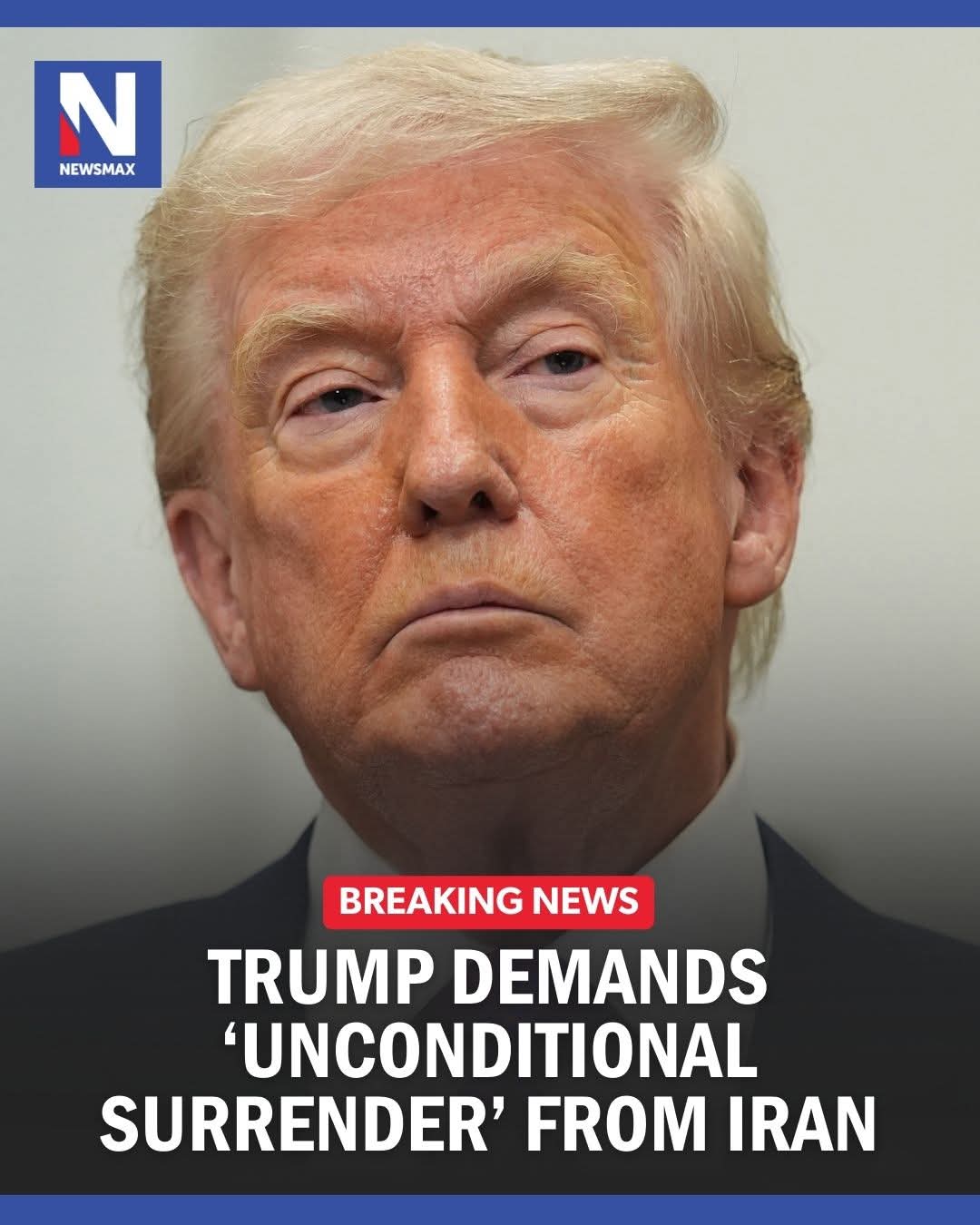
In a dramatic escalation of rhetoric, President Donald Trump declared on Friday morning that the United States would accept no agreement with Iran short of its “UNCONDITIONAL SURRENDER.” The statement, posted on his Truth Social platform, came as the U.S.-Israeli military campaign against Iran entered its second week, with ongoing airstrikes targeting Iranian military infrastructure, nuclear-related sites, and command centers.
Trump wrote: “There will be no deal with Iran except UNCONDITIONAL SURRENDER! After that, and the selection of a GREAT & ACCEPTABLE Leader(s), we, and many of our wonderful and very brave allies and partners, will work tirelessly to bring Iran back from the brink of destruction, making it economically bigger, better, and stronger than ever before.”
The president’s uncompromising stance marks a sharp shift from earlier hints of potential negotiations, effectively ruling out diplomatic off-ramps unless Iran fully capitulates. In subsequent comments to Axios, Trump clarified that “unconditional surrender” could mean the regime’s military capabilities being destroyed to the point where it “can’t fight any longer,” rather than a formal document-signing ceremony. White House Press Secretary Karoline Leavitt reinforced this, stating it would occur when Trump determines Iran no longer poses a threat to the U.S. or its allies in the Middle East.
The conflict erupted after U.S. and Israeli forces launched major strikes, citing Iran’s advancing nuclear program, ballistic missile development, and support for proxy attacks. Reports indicate over 1,300 Iranian casualties from bombings, while U.S. Central Command has claimed significant degradation of Iran’s navy, drone capabilities, and missile stockpiles. Iran has retaliated with drone and missile barrages against Israel and Gulf targets, though its president, Masoud Pezeshkian, vowed Tehran would “never capitulate,” dismissing the demand as an unrealistic “dream.”
The statement has drawn international attention, with Russia reportedly sharing intelligence with Iran and diplomatic efforts appearing stalled. Critics question the feasibility of regime change or prolonged U.S. involvement, while supporters see it as a bold strategy to neutralize long-term threats.
As strikes continue and civilian evacuations proceed from the region, Trump’s words signal a high-stakes endgame: total Iranian submission or extended warfare. The coming days will test whether this maximalist position leads to collapse or deeper entrenchment in the Middle East crisis.

WŁAŚNIE OGŁOSILI! Zobacz więcej

Totalny wstrząs w sondażach! 🤯 Takich wyników jeszcze nie było. Zobacz 👇

Uuu…. Co się dzieje! 😱 @obserwujący⤵️⤵️

🚨 HE’S COMING HOME: The same former first-round draft pick who once electrified Rogers Place is eyeing a sensational return to the Edmonton Oilers — and the entire NHL world is already trembling! 🏒🔥 Full story via 👇

Ugandan-Born NYC Mayor Sues to Stop Trump From Blocking Welfare-Dependent Green Cards

Late-night host Jimmy Kimmel recently sparked a debate online after suggesting the Trump era will ultimately be remembered as one of the most shameful chapters in American history.

Trump says Zelenskyy must stop striking Russian diesel infrastructure because the attacks are contributing to fuel shortages.

Waldemar Żurek od ponad roku kieruje Ministerstwem Sprawiedliwości i pozostaje jedną z najbardziej wyrazistych postaci rządu.

Pierwsze 72 godziny są kluczowe ‼ Służby wyjaśniają, co należy zrobić ⬇

Czegoś podobnego nikt się nie spodziewał 😱😱👇

Wystarczył jeden oficjalny komunikat, by na Wyspach zapanowała przejmująca cisza… 💔🕯️
