
NEWS
Global Markets Stabilize as Strait of Hormuz Reopens After U.S. Precision Strike

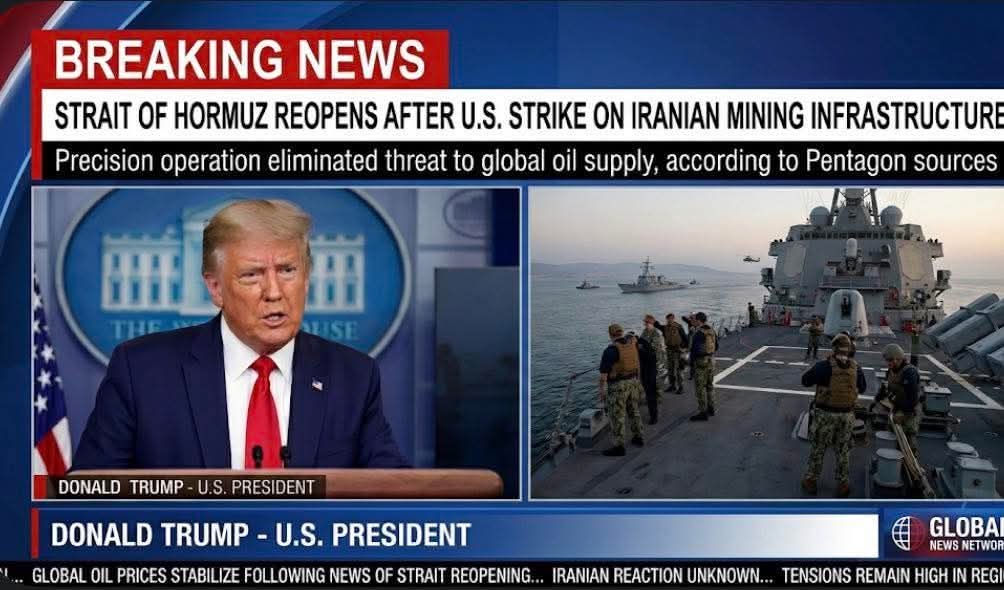
In a dramatic turn of events that has sent ripples across global political and economic circles, the Strait of Hormuz—one of the world’s most critical النفط transit chokepoints—has officially reopened following a targeted military operation by the United States against Iranian mining infrastructure.
The narrow waterway, which lies between Iran and Oman, is responsible for transporting nearly a fifth of the world’s oil supply. Its sudden closure in recent days, triggered by suspected underwater mining activities, sparked fears of a severe disruption to global energy markets and heightened geopolitical tensions across the Middle East.
The Operation
According to reports from United States Department of Defense, U.S. forces carried out a “precision strike” targeting key Iranian installations believed to be responsible for deploying naval mines in the strategic corridor. The operation was described as swift and calculated, aimed at neutralizing threats without escalating into a broader regional conflict.
While officials did not disclose the full extent of the damage, early intelligence suggests that the strike effectively dismantled the infrastructure used to disrupt maritime navigation in the area.
Strategic Importance of the Strait
The Strait of Hormuz serves as a vital artery for global oil shipments, linking producers in the Persian Gulf to international markets. Countries including Saudi Arabia, Iraq, and the United Arab Emirates rely heavily on this route to export crude oil.
Any disruption in this region typically triggers immediate volatility in oil prices, with ripple effects felt in transportation, manufacturing, and consumer goods worldwide.
Market and Global Reaction
Following news of the reopening, global oil prices began to stabilize after a brief surge. Analysts note that investor confidence is cautiously returning, though concerns remain about the potential for further escalation between United States and Iran.
International leaders have called for restraint and renewed diplomatic engagement to prevent future disruptions. The United Nations issued a statement urging all parties to prioritize de-escalation and ensure the continued safety of international shipping lanes.
What Comes Next?
While the immediate crisis appears to have been contained, geopolitical analysts warn that the situation remains fragile. The Strait of Hormuz has long been a flashpoint in U.S.-Iran relations, and any renewed hostilities could once again threaten global energy security.
For now, the reopening of this crucial maritime passage offers a moment of relief for global markets—but also serves as a stark reminder of how quickly tensions in a single region can impact the entire world.
As the international community watches closely, the focus now shifts to diplomacy, stability, and safeguarding one of the most vital trade routes on the planet.

WŁAŚNIE OGŁOSILI! Zobacz więcej

Totalny wstrząs w sondażach! 🤯 Takich wyników jeszcze nie było. Zobacz 👇

Uuu…. Co się dzieje! 😱 @obserwujący⤵️⤵️

🚨 HE’S COMING HOME: The same former first-round draft pick who once electrified Rogers Place is eyeing a sensational return to the Edmonton Oilers — and the entire NHL world is already trembling! 🏒🔥 Full story via 👇

Ugandan-Born NYC Mayor Sues to Stop Trump From Blocking Welfare-Dependent Green Cards

Late-night host Jimmy Kimmel recently sparked a debate online after suggesting the Trump era will ultimately be remembered as one of the most shameful chapters in American history.

Trump says Zelenskyy must stop striking Russian diesel infrastructure because the attacks are contributing to fuel shortages.

Waldemar Żurek od ponad roku kieruje Ministerstwem Sprawiedliwości i pozostaje jedną z najbardziej wyrazistych postaci rządu.

Pierwsze 72 godziny są kluczowe ‼ Służby wyjaśniają, co należy zrobić ⬇

Czegoś podobnego nikt się nie spodziewał 😱😱👇

Wystarczył jeden oficjalny komunikat, by na Wyspach zapanowała przejmująca cisza… 💔🕯️
