
NFL
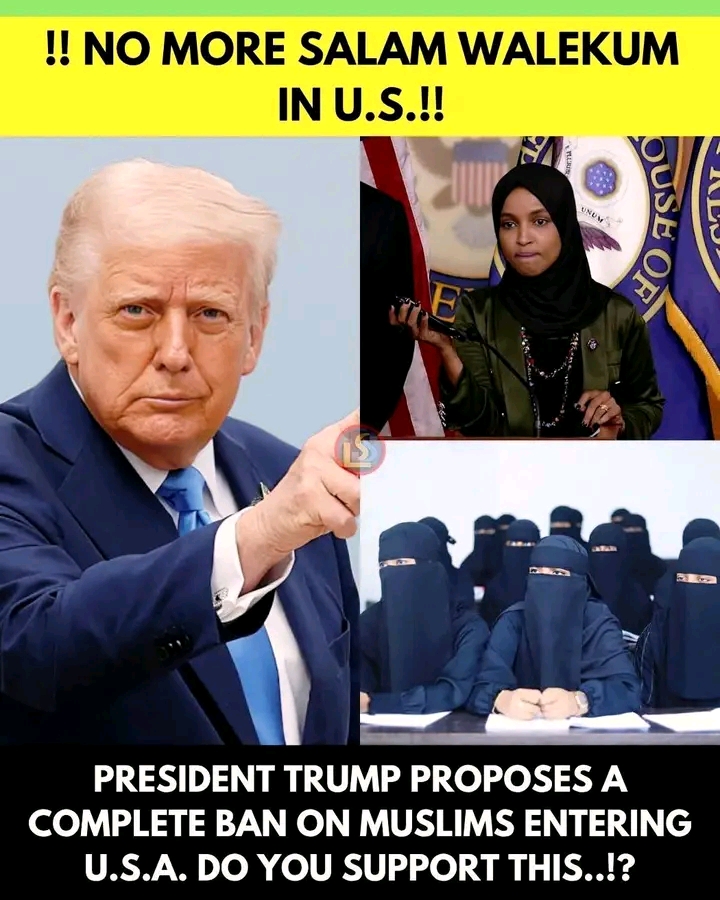
Trump’s “Muslim Ban” Claim — What He Proposed and What Became Policy A viral claim that Donald Trump proposed a complete ban on all Muslims entering the United States needs important context.

Trump’s “Muslim Ban” Claim — What He Proposed and What Became Policy
A viral claim that Donald Trump proposed a complete ban on all Muslims entering the United States needs important context.
During his 2015 presidential campaign, Trump did explicitly call for a temporary “total and complete shutdown” of Muslims entering the United States.
The American Presidency Project
However, the immigration restrictions later implemented during his first presidency were different from that original campaign proposal.
In 2017, the administration introduced travel restrictions covering nationals of several countries, many of them Muslim-majority, while describing the measures as necessary for national security and improved vetting.
The policy went through multiple revisions and legal challenges. Its later version was country-based rather than a worldwide prohibition on Muslims.
It also included restrictions involving North Korea and certain Venezuelan officials, along with exemptions and a waiver process for eligible individuals. Supreme Court
In June 2018, the U.S. Supreme Court upheld the revised proclamation in Trump v. Hawaii by a 5–4 decision.
The majority concluded that the government had provided a sufficient national-security justification under the legal standard it applied. Several dissenting justices strongly disagreed, arguing that Trump’s earlier statements about Muslims were relevant evidence of religious hostility.
Supreme Court
So, two facts can be distinguished: Trump proposed a broad Muslim-entry ban during his 2015 campaign, but the policy ultimately upheld by the Supreme Court was based on nationality and country-specific restrictions rather than a blanket worldwide ban on Muslims.

When officials tried to lock the doors of her salon, Shelley Luther refused to abandon the people who depended on her. Full story here

Susie Wiles reveals the brutal toll of fighting breast cancer while running Trump’s White House, saying some days just getting out of bed was a test. More details here

A gold-plated Cybertruck worth more than $100,000. A lavish casino-themed party. And millions meant to provide health care for America’s military community.

Trump’s “Muslim Ban” Claim — What He Proposed and What Became Policy A viral claim that Donald Trump proposed a complete ban on all Muslims entering the United States needs important context.

CROWDS CARRY CROSSES AND CHANT “CHRIST IS KING” AT MAJOR LONDON MARCH

News CNN has been denied access to Air Force One for President Donald Trump’s Saturday flight to Knoxville, Tennessee hours after the official media pool had started working again.

🚨 TRUMP REJECTS IRAN’S 7-DAY PROPOSAL

🚫 ASYLUM CRACKDOWN: Do you support the Trump administration denying 440,000 asylum claims? YES or NO 👇 VOTE HERE–>

🇺🇸 Proposal Would Change Who Can Serve in the U.S. Government

Federal money is not a welcome kit. When the Treasury underwrites housing, travel, and services for people who entered illegally, taxpayers are paying for the invitation.

The Supreme Court ruled Friday that DHS can use an expanded database to remove illegal aliens and non-citizens from voter rolls.
