
NEWS
🚨 BREAKING: TRUMP ADMITS HE WAS TESTING NATO — “WE DIDN’T NEED ANY HELP!” 🇺🇸🔥

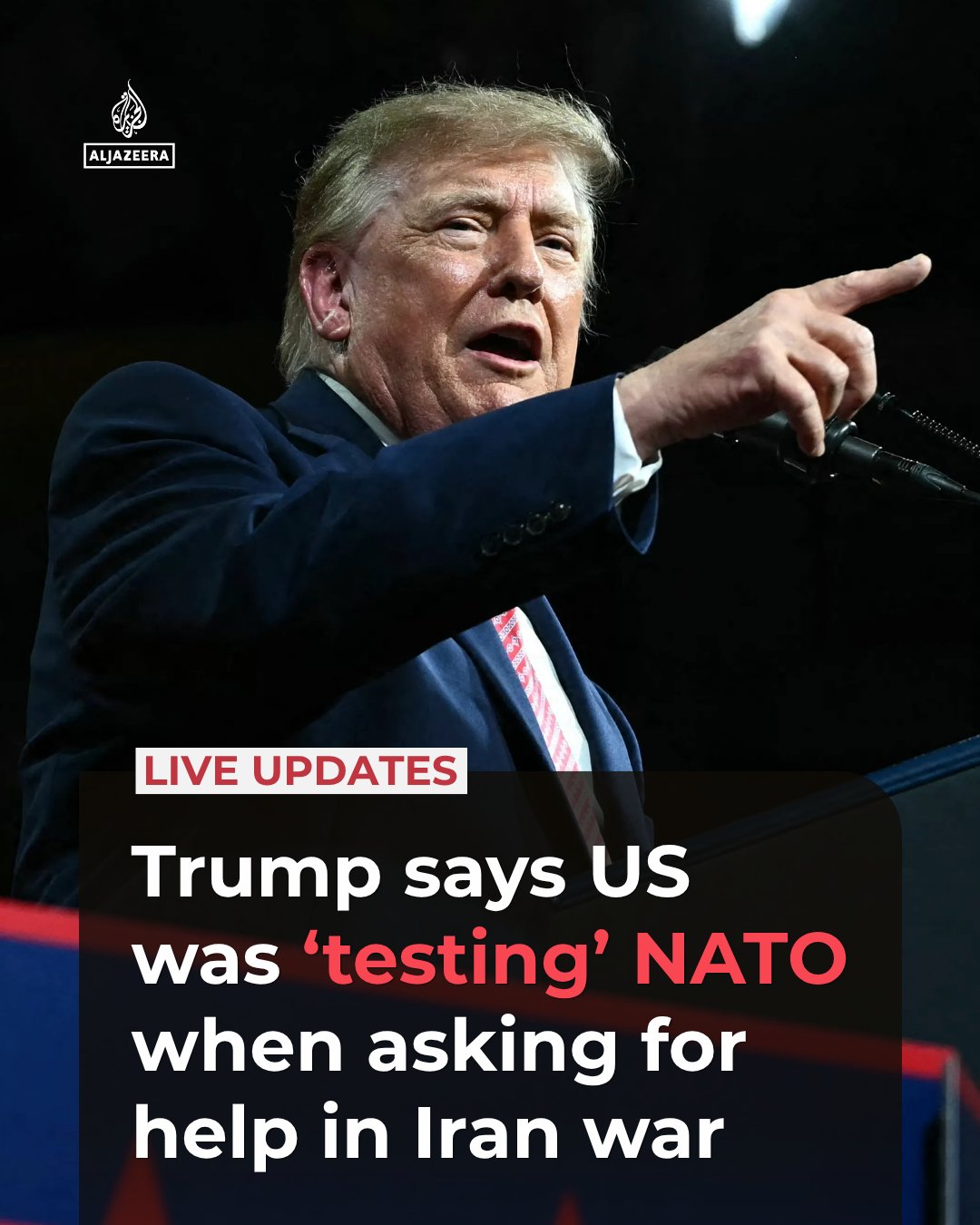
🚨 BREAKING: TRUMP ADMITS HE WAS TESTING NATO — “WE DIDN’T NEED ANY HELP!” 🇺🇸🔥
President Donald Trump has reignited the debate over America’s relationship with its NATO allies after revealing that his request for assistance during the US-Israel war on Iran was, in his words, a test of the alliance’s loyalty.
In a stunning statement, Trump said the United States did not actually need military assistance but wanted to find out whether its traditional allies would stand alongside Washington during a major international crisis.
“When we asked for help in Iran, help which we didn’t need,” Trump said, explaining that he was testing whether NATO members would respond to America’s request.
His message was clear: he wanted to know whether the countries that rely on American military power would also be willing to support the United States when Washington needed them.
🇺🇸 TRUMP QUESTIONS NATO’S LOYALTY
Trump expressed frustration with several European allies, specifically mentioning Italy, Germany, and France as countries that declined to provide the support he wanted.
The president questioned why the United States spends enormous sums on NATO’s collective defense if some members are unwilling to help Washington during a crisis.
According to Trump, America has repeatedly stood up for its allies, and he believes that support should be reciprocated.
His remarks reflect his long-standing criticism of NATO, particularly his argument that the United States carries too much of the financial and military burden for the alliance.
🌍 A MAJOR TEST FOR THE WESTERN ALLIANCE?
NATO was established on the principle of collective defense, with member countries agreeing that an armed attack against one or more members can trigger a collective response under Article 5 of the North Atlantic Treaty.
However, that principle does not automatically require every member to participate in every military operation launched by an ally.
This distinction is at the heart of the current debate.
European governments have been cautious about becoming directly involved in the US-Israel conflict with Iran, raising difficult questions about national interests, military commitments, and the limits of alliance solidarity.
Trump, meanwhile, appears determined to use the episode to challenge what he sees as an imbalance in the relationship.
🔥 WHAT HAPPENS NEXT?
Trump’s comments could put further pressure on an already strained relationship between Washington and several European capitals.
They also raise a crucial question about the future of NATO: Can an alliance remain united when its most powerful member questions whether its partners can be trusted?
For supporters of Trump’s approach, his strategy is a necessary test of whether America’s allies are willing to share responsibility rather than depend on US protection.
Critics, however, may argue that treating military cooperation as a loyalty test risks deepening divisions among countries that depend on one another for security.
One thing is certain: Trump’s remarks have placed NATO’s unity and the meaning of alliance loyalty firmly back in the spotlight.
💬 NOW THE BIG QUESTION: Was Trump right to test NATO, or should America’s president have handled the situation differently?
👇 Drop your opinion in the comments!
🇺🇸 TEAM TRUMP: Allies should stand with America when it needs them.
🌍 TEAM NATO: Every country has the right to decide whether to participate in a war.
🔥 SHARE this story and let the debate begin!
Suggested hashtags:
#DonaldTrump #NATO #IranWar #BreakingNews #USPolitics #WorldNews #Geopolitics #TrumpNews

🚨🔥 JUST IN: TAYLOR SWIFT JUST CROSSED AN INCREDIBLE MILESTONE ON SPOTIFY! 👑🎶

🚨💔 BREAKING: NFL UMPIRE LARRY SMITH RULED OUT FOR THE REST OF THE 2026 SEASON AFTER HORRIFIC INJURY IN LONDON! 🏈😢

🚨🔥 JUST IN: JAY-Z REPORTEDLY PICKS HIMSELF FOR SUPER BOWL LXI HALFTIME SHOW — AND FANS ARE ALREADY TALKING! 👑🎤

🚨🎉 HAPPY BIRTHDAY TO THE KING OF THE BACKFIELD! 👑🏈 KENNETH WALKER III IS CELEBRATING HIS SPECIAL DAY! 🔥💙💚

🚨🌍 BREAKING: IRAN AND RUSSIA DRAW CLOSER AS ABBAS ARAGHCHI DECLARES HISTORIC TIES! 🇮🇷🇷🇺

🚨 BREAKING: TRUMP ADMITS HE WAS TESTING NATO — “WE DIDN’T NEED ANY HELP!” 🇺🇸🔥

🚨 JUST IN: NORTH KOREA RESPONDS TO KIM JONG UN DEATH RUMORS — NEW IMAGES SPARK GLOBAL REACTIONS! 🇰🇵👀

🚨🔥 BREAKING: JADEN MCDANIELS SECURES A MASSIVE $40 MILLION EXTENSION WITH THE MINNESOTA TIMBERWOLVES! 🐺💰

🚨🔥 NFL FANS, CHRISTIAN McCAFFREY IS BUILT DIFFERENT! THE 49ERS SUPERSTAR MAKES HISTORY WITH AN INCREDIBLE RUSHING AND RECEIVING MILESTONE! 🏈👑

🚨 HEARTBREAKING NFL NEWS: Jalen Hurts Reportedly Out for the Season After Doctors Discover Blood

🚨🔥 BREAKING: TRUMP JUST CALLED OUT FRANCE’S EXPLOSIVE CRISIS — AND HIS WORDS HAVE IGNITED A GLOBAL DEBATE! 🇺🇸🇫🇷
