
NEWS
FROM FEEDING SOLDIERS TO FUNDING WEAPONS: Yemeni Women Take on a New Role as Houthi Fighters Tighten the Siege of Taiz

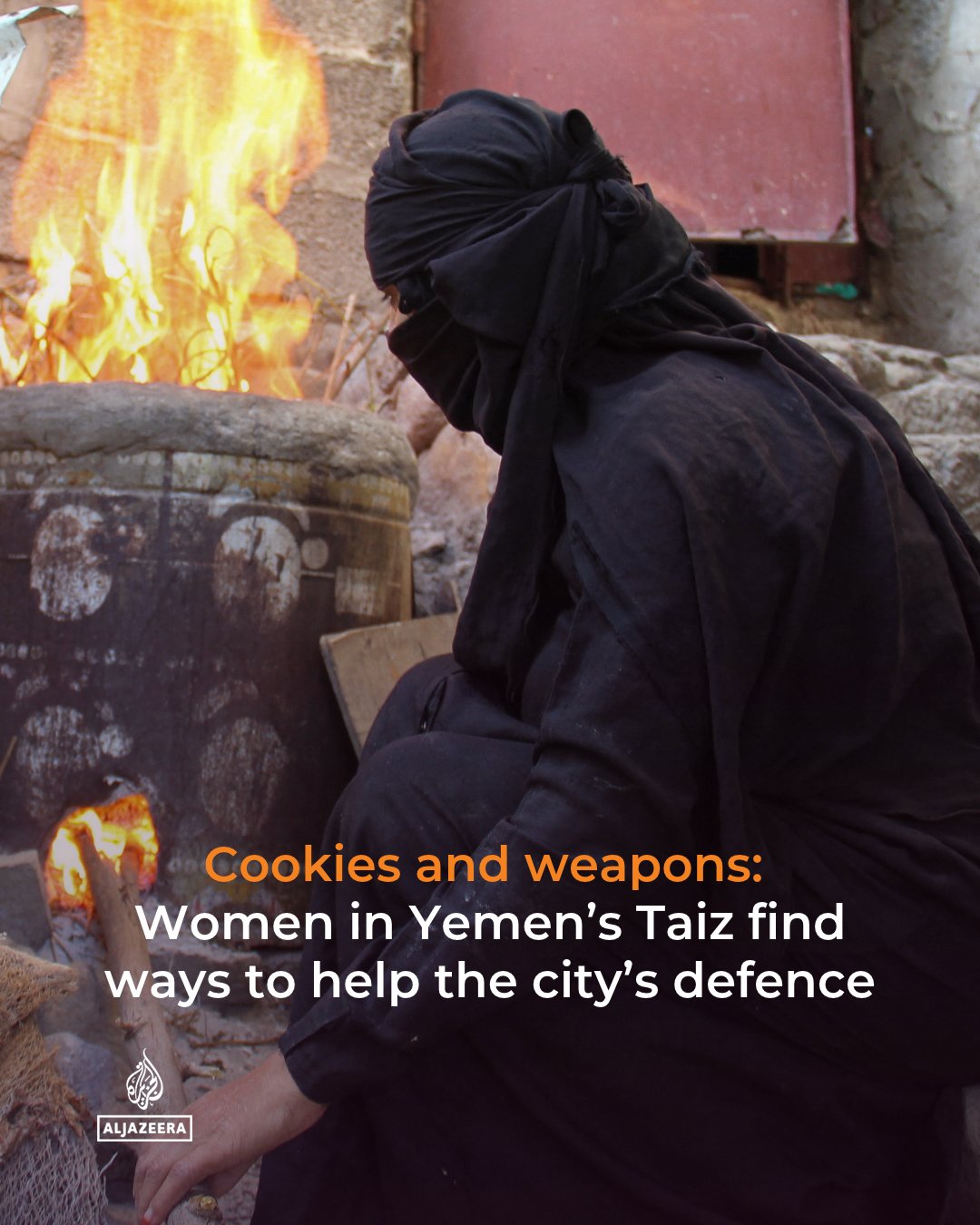
🚨 FROM FEEDING SOLDIERS TO FUNDING WEAPONS: Yemeni Women Take on a New Role as Houthi Fighters Tighten the Siege of Taiz
In a city where survival has become a daily struggle, women who once organised food deliveries for soldiers defending their homes are now raising money to purchase weapons and ammunition. As the siege of Taiz intensifies, their extraordinary shift reveals the human cost of Yemen’s prolonged conflict and the determination of civilians caught in the middle.
The situation in southwestern Yemen is drawing attention to the remarkable and increasingly dangerous roles women are taking on as their communities struggle to survive. In the government-held city of Taiz, where Houthi fighters have tightened their siege, a group of women who initially mobilised to provide food for soldiers defending the city has reportedly begun raising money to purchase weapons and ammunition.
What began as an effort to support hungry soldiers has evolved into something far more consequential. These women are no longer concentrating solely on preparing meals and organising food deliveries. Their fundraising efforts reflect the growing pressure on a community facing insecurity, restricted access to essential supplies, and the persistent threat of violence.
Their story raises difficult questions about the realities of life in a conflict zone. What happens when people who simply want their families and communities to live in peace begin to believe that even basic survival depends on supporting an armed defence? And what does their changing role reveal about the devastating impact of a war that has affected generations of Yemenis?
A CITY UNDER PRESSURE
Taiz has endured years of conflict, making it one of the most prominent examples of the suffering experienced by civilians during Yemen’s war.
The city occupies an important strategic position, and the struggle for control of the surrounding areas has contributed to prolonged insecurity. Restrictions on movement and access have created serious difficulties for residents, particularly when obtaining food, medicine, fuel, and other necessities becomes increasingly complicated.
For families living through such conditions, the conflict is not simply a series of military developments reported in the news. It is a daily reality that affects whether children can attend school, whether hospitals can obtain essential supplies, and whether households can afford enough food to survive.
As pressure on the city increases, the people living there must find ways to cope with circumstances that are largely beyond their control.
For some women in Taiz, that has meant organising assistance for soldiers who are defending government-held areas. Providing food may appear to be a small contribution in the context of a prolonged conflict, but it can represent an important act of solidarity in a community where resources are limited and ordinary life has been disrupted.
Now, according to the reported developments, some of these women are taking a more controversial step by raising money to purchase weapons and ammunition.
The change illustrates how prolonged insecurity can transform the choices people believe are available to them.
WHEN A FOOD INITIATIVE TAKES A DIFFERENT DIRECTION
The original mission of these women was centred on providing food to soldiers. Their efforts reflected a familiar reality of armed conflicts around the world: when formal support systems struggle to meet the needs of people on the front lines, civilians sometimes organise community assistance.
Women frequently carry a significant share of the responsibility for keeping families and communities functioning during crises. They organise food distribution, care for children and older relatives, help displaced neighbours, and find ways to secure necessities when markets and public services are disrupted.
In Taiz, the reported initiative began with this kind of practical support.
But the tightening siege appears to have changed the priorities of some participants. Rather than limiting their efforts to food deliveries, they have begun collecting money for weapons and ammunition to support the defence of their city.
That development deserves careful attention because it highlights how a prolonged conflict can blur the boundaries between humanitarian assistance and direct support for armed operations.
Food distribution can help meet immediate human needs. Fundraising for weapons, however, carries different risks and consequences, potentially drawing civilians more directly into the dynamics of warfare.
The women involved may see their actions as a response to the danger confronting their community. Nevertheless, the development also underscores the increasingly difficult decisions that civilians face when insecurity persists and the prospect of a peaceful resolution seems distant.
Their story is not simply about fundraising. It is about the pressures that can push ordinary people into extraordinary and potentially dangerous roles.
THE WOMEN BEHIND THE HEADLINES
It is easy to discuss a conflict through the movements of fighters, territorial gains, military strategies, and political negotiations. Yet the experiences of women living through war often reveal a different dimension of the crisis.
Women are not merely spectators in humanitarian emergencies. Across conflict-affected communities, they frequently become organisers, caregivers, advocates, and providers when normal support structures break down.
In Taiz, the reported transition from organising food deliveries to raising money for weapons illustrates how women can become involved in the broader struggle over their community’s future.
However, it is important not to reduce their experiences to a simple story of bravery or resistance. The consequences of armed conflict are complicated, and decisions made under extreme pressure can carry serious risks.
Some women may believe that supporting the defence of their city is necessary to protect their families. Others in the community may worry about the dangers of further militarisation and the possibility that civilians could become even more exposed to violence.
Both concerns reflect the difficult environment in which people are trying to make decisions.
The women of Taiz should therefore be understood within the wider circumstances surrounding them: a prolonged conflict, persistent insecurity, and the struggle to preserve community life under extraordinary pressure.
Their actions may attract attention, but their underlying circumstances deserve just as much consideration.
THE HUMAN COST OF YEMEN’S PROLONGED CONFLICT
Yemen’s war has produced a devastating humanitarian crisis, affecting access to food, healthcare, clean water, education, and economic opportunities.
Years of fighting have placed enormous pressure on families and communities. Displacement, damaged infrastructure, disrupted livelihoods, and restrictions on essential supplies have made recovery difficult in many areas.
For people in a besieged or heavily contested city, the consequences can be especially severe.
A family may have to choose between purchasing food and paying for medicine. A parent may struggle to find reliable work while trying to keep children safe. A patient may face difficulties reaching a medical facility or obtaining treatment.
These hardships help explain why community networks can become so important during conflict.
When public services and ordinary economic activities are disrupted, neighbours and local organisations often step in to provide assistance. Their work can help people endure circumstances that would otherwise be even more difficult.
But community solidarity cannot replace a functioning humanitarian system, and it cannot resolve the underlying causes of a war.
The reported fundraising initiative in Taiz illustrates this tension. The women are attempting to respond to an immediate security challenge, yet their decision to raise money for weapons also demonstrates how deeply the conflict has affected civilian life.
A community that begins by organising food for soldiers and later turns to fundraising for ammunition is experiencing a conflict that reaches far beyond the battlefield.
It is a reminder that prolonged warfare can change not only the physical landscape of a city but also the responsibilities, priorities, and difficult choices of the people who live there.
COULD THE SIEGE BECOME EVEN MORE DANGEROUS?
The tightening siege of Taiz raises serious concerns about the safety of residents and the ability of humanitarian organisations to reach people who need assistance.
When access to a city becomes restricted, the consequences can extend well beyond military positions. Food prices may rise, medical supplies may become harder to obtain, and families may struggle to move to safer locations.
Escalating fighting can also increase the risk of civilian casualties, displacement, and damage to essential infrastructure.
The reported move by some women to raise funds for weapons and ammunition adds another dimension to an already difficult situation. It suggests that at least some members of the community believe that supporting the city’s defence requires more than providing basic supplies.
However, it would be premature to conclude that the fundraising effort will change the military balance or determine the future of Taiz. Its scale, financial resources, and practical impact would need to be independently established before any such conclusions could be drawn.
What is clear is that the situation highlights the urgency of protecting civilians and ensuring that humanitarian assistance can reach people in need.
Whatever happens on the battlefield, ordinary residents should not be forgotten. Their safety, access to essential supplies, and ability to live without constant fear must remain central to any discussion of the city’s future.
A STORY THAT GOES BEYOND WEAPONS
The most striking aspect of this story is the transformation in the role of the women involved.
Their initial response was to provide food, an act associated with caring for people facing the immediate hardships of conflict. Their subsequent decision to raise money for weapons and ammunition represents a more direct involvement in the armed struggle surrounding their city.
That transformation reflects the pressures of living in an environment where insecurity has become a persistent part of everyday life.
Yet the story should not be used to romanticise war or suggest that civilians must take up the burden of sustaining armed conflict. The fact that people feel compelled to make such difficult choices should prompt deeper questions about the conditions they face and the efforts being made to protect them.
Women in Taiz, like civilians elsewhere in Yemen, deserve access to food, healthcare, education, and safety. They deserve opportunities to shape their community’s future without having to live under the constant threat of violence.
Their determination to support their community may be striking, but the greater measure of success would be a future in which such efforts were no longer necessary for survival.
THE BIGGER QUESTION: HOW DOES THE CONFLICT END?
The situation in Taiz is a reminder that military developments alone cannot provide a lasting solution to Yemen’s crisis.
A sustainable future will require efforts to reduce violence, protect civilians, improve humanitarian access, and address the political disputes that have contributed to the conflict.
Negotiations and peace initiatives face serious challenges, but the alternative is a continued cycle of insecurity in which families and communities remain exposed to the consequences of armed confrontation.
The women raising funds in Taiz are responding to the circumstances they face today. Their story also points towards a more fundamental question: how can Yemen reach a future in which ordinary people are able to concentrate on rebuilding their lives rather than adapting to the demands of a prolonged war?
There is no simple answer. But protecting civilians, facilitating humanitarian assistance, and pursuing a credible path towards peace are essential parts of any meaningful response.
The people of Taiz should not have to choose between hunger and insecurity, nor should their future depend on how long their community can endure a siege.
Their experiences deserve attention not only because of the unusual actions reported in the city, but also because they expose the human consequences of a conflict that has continued for far too long.
FINAL THOUGHTS
The reported shift among women in Taiz, from organising food deliveries for soldiers to raising money for weapons and ammunition, is a powerful illustration of how deeply war can reshape civilian life.
It is a story of community mobilisation under pressure, but it is also a warning about the extent to which prolonged insecurity can draw ordinary people into the realities of armed conflict.
Behind every headline about a siege are families trying to find food, parents worrying about their children, patients seeking treatment, and communities hoping that tomorrow will be safer than today.
The women of Taiz are now part of a story that raises difficult questions about survival, security, and the future of Yemen.
Ultimately, the most important question is not simply how much money can be raised or how the military situation might develop. It is whether the people living through the conflict will eventually have the opportunity to rebuild their lives in peace.
Because the true victory in any conflict is not measured only by what happens on the battlefield. It is also measured by how many lives are protected, how many families can return to normal life, and whether future generations can grow up without inheriting the same cycle of violence.
💬 JOIN THE CONVERSATION
What do you think about the situation in Taiz, Yemen?
Should the international community do more to protect civilians and ensure humanitarian aid reaches people trapped by the siege? And what steps do you believe could help bring lasting peace to Yemen?
Share your thoughts in the comments, and share this story to raise awareness of the civilians living through Yemen’s ongoing conflict.
Suggested hashtags:
#Yemen #Taiz #BreakingNews #MiddleEast #HumanitarianCrisis #WorldNews #WomenInConflict #PeaceForYemen

#Eagles RB Saquon Barkley is expected to return to practice today and is in line to play Monday against the #Cowboys, sources say. A lift for the team’s offense with a banged-up backfield and Jalen Hurts on the mend.

🚨 JUST IN: Jordan Love Dealing With Sore Back Before Lions Clash — But His Message Has Packers Fans Breathing a Sigh of Relief! 🏈🔥

JUST IN: NFL Cancels Steelers Fan House Event in Paris — But the Sunday Show Will Go On! What Is Really Happening?

Weather warning in place ahead of Storm Boelo

FROM FEEDING SOLDIERS TO FUNDING WEAPONS: Yemeni Women Take on a New Role as Houthi Fighters Tighten the Siege of Taiz

🚨 BREAKING: 🇬🇷 GREECE TAKES ACTION AGAINST IRAN! NEW SANCTIONS MOVE RAISES BIG QUESTIONS ABOUT TEHRAN’S FINANCIAL FUTURE 🌍⚠️

BREAKING: 49ERS GET HUGE BOOST! CHRISTIAN KIRK IS SET TO MAKE HIS SEASON DEBUT! 🔥🏈

MICHIGAN SENATE SHOWDOWN! Abdul El-Sayed and Mike Rogers Clash in Fiery Final Debate Ahead of November Midterms 🇺🇸🔥

🚨 BREAKING: Iran Signals New Weapons Reveal as Reports Claim Trump Has Ordered Plans for Strikes on Energy Infrastructure!

🚨🔥 GIANNIS AND LAMELO DEBUT FOR THEIR NEW TEAMS! NBA FANS ARE READY FOR A NEW ERA!

Former NFL Defense Allen Bailey Dead at 37
