
NEWS
JUST IN: What Trump Says vs. What the Intelligence Says on Iran.

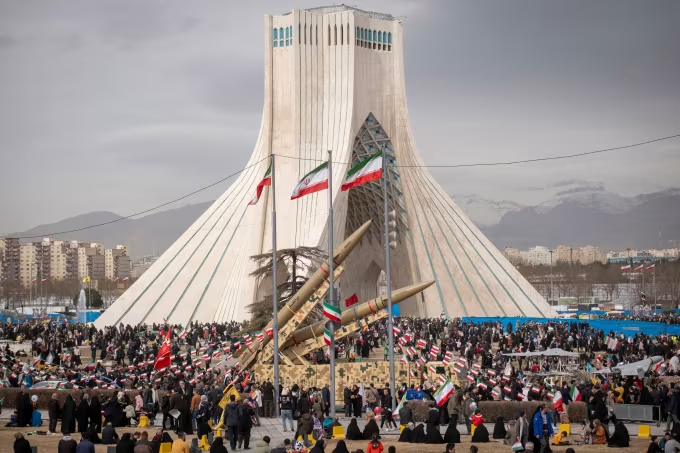
Tensions between the United States and Iran are once again dominating global headlines, but a growing gap has emerged between President Donald Trump’s public statements and the assessments coming from intelligence officials and independent analysts.
Over the past several months, Trump has repeatedly warned that Iran is dangerously close to becoming a nuclear threat, arguing that aggressive action is necessary to stop Tehran before it is “too late.” He has claimed Iran could soon develop missiles capable of reaching the United States and insisted that U.S. and Israeli strikes severely crippled Iran’s military and nuclear infrastructure.
However, intelligence assessments paint a more cautious and complex picture.
According to reports cited by intelligence experts, the U.S. Intelligence Community concluded that Iran is not currently building a nuclear weapon and that its supreme leadership has not officially restarted the nuclear weapons program that was suspended years ago. While analysts acknowledge that Iran possesses large enriched uranium stockpiles and advanced nuclear knowledge, they say there is limited evidence that Tehran has decided to actively construct a bomb.
Another major point of disagreement involves Iran’s missile capabilities. Trump has publicly warned that Iran is developing missiles that could “soon reach the American homeland.” Yet intelligence sources cited in multiple reports say there is no confirmed evidence that Iran is actively pursuing an intercontinental ballistic missile program designed to strike the United States in the near future. Experts note that Iran could potentially develop such capabilities over time, but current intelligence does not support the idea of an imminent threat.
Questions have also been raised about Trump’s repeated claims that Iran’s military defenses were essentially wiped out. During one press conference, Trump declared Iran had “no anti-aircraft weaponry” left. But military analysts pointed out that Iranian forces were still capable of striking aircraft and operating mobile air defense systems despite suffering heavy losses.
The disagreement reflects a broader debate inside Washington over how serious the Iranian threat truly is and how much urgency should guide U.S. policy.
Supporters of Trump argue that strong warnings and military pressure are necessary to deter Iran and prevent future escalation. They believe waiting for absolute proof of weaponization could allow Tehran to move too far ahead before the world reacts.
Critics, however, warn that exaggerated claims risk pushing the United States toward unnecessary conflict. Some analysts fear that overstating intelligence findings could damage public trust, especially given the historical memory of disputed intelligence used before the Iraq War in 2003.
Meanwhile, diplomatic efforts remain fragile. Trump recently suggested he could accept a temporary suspension of Iran’s nuclear program under strict conditions, signaling possible room for negotiations even amid escalating rhetoric.
As the crisis continues, the divide between political messaging and intelligence analysis is becoming one of the most closely watched aspects of the Iran debate. Whether diplomacy prevails or tensions deepen may depend on which narrative ultimately shapes U.S. policy in the months ahead.

WŁAŚNIE OGŁOSILI! Zobacz więcej

Totalny wstrząs w sondażach! 🤯 Takich wyników jeszcze nie było. Zobacz 👇

Uuu…. Co się dzieje! 😱 @obserwujący⤵️⤵️

🚨 HE’S COMING HOME: The same former first-round draft pick who once electrified Rogers Place is eyeing a sensational return to the Edmonton Oilers — and the entire NHL world is already trembling! 🏒🔥 Full story via 👇

Ugandan-Born NYC Mayor Sues to Stop Trump From Blocking Welfare-Dependent Green Cards

Late-night host Jimmy Kimmel recently sparked a debate online after suggesting the Trump era will ultimately be remembered as one of the most shameful chapters in American history.

Trump says Zelenskyy must stop striking Russian diesel infrastructure because the attacks are contributing to fuel shortages.

Waldemar Żurek od ponad roku kieruje Ministerstwem Sprawiedliwości i pozostaje jedną z najbardziej wyrazistych postaci rządu.

Pierwsze 72 godziny są kluczowe ‼ Służby wyjaśniają, co należy zrobić ⬇

Czegoś podobnego nikt się nie spodziewał 😱😱👇

Wystarczył jeden oficjalny komunikat, by na Wyspach zapanowała przejmująca cisza… 💔🕯️
