
NEWS
🚨 BREAKING: TRUMP LAUNCHES $25 MILLION FRAUD-REPORTING PROGRAM AND REWARDS YOUTUBER $10,000 — BUT WHO DECIDES WHO GETS PAID?

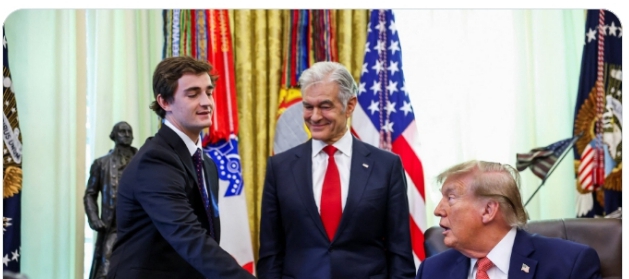
🚨 BREAKING: TRUMP LAUNCHES $25 MILLION FRAUD-REPORTING PROGRAM AND REWARDS YOUTUBER $10,000 — BUT WHO DECIDES WHO GETS PAID?
A major announcement from the White House is triggering a heated debate across America. President Donald Trump has introduced a new initiative designed to encourage people to report suspected fraud involving government programs, and conservative YouTuber Nick Shirley has received a $10,000 reward. But while supporters are celebrating the move as a potential weapon against corruption, critics are raising important questions about accountability, evidence, and how the program will operate.
The announcement has placed a controversial question at the center of the political conversation: Should ordinary citizens receive financial rewards for exposing suspected fraud involving public money?
For supporters of the initiative, the answer is straightforward. They believe that taxpayers deserve stronger protections against fraud and that people who uncover wrongdoing should have an incentive to speak up. Critics, however, argue that a system involving financial rewards must be carefully managed to prevent misleading accusations, political favoritism, and unnecessary damage to innocent people.
With millions of dollars committed to the initiative, the debate is only beginning.
🔥 TRUMP’S NEW ANTI-FRAUD INITIATIVE GRABS NATIONAL ATTENTION
On October 20, 2026, Trump and Vice President JD Vance announced the Fraud Whistleblower Incentive Program, a new initiative intended to encourage the public to report suspected fraud involving government programs.
According to reporting by Reuters and the Associated Press, the Treasury Department is committing $25 million to the initiative, while the Department of Justice will administer the rewards.
Under the program as described by the Justice Department, eligible tipsters whose information leads to criminal charges may receive between $10,000 and $30,000, subject to the program’s requirements and the department’s discretion.
Trump also discussed the possibility of rewarding tipsters with a percentage of the fraud uncovered. The precise terms and implementation of that proposal are important because they will determine how the system works in practice.
The administration’s argument is that people who witness suspicious activity may possess information that government investigators would otherwise struggle to obtain.
Rather than relying exclusively on traditional investigations, officials want to encourage more people to come forward with credible information.
The big question now is whether the initiative can deliver meaningful results while maintaining strong safeguards against false or unsubstantiated allegations.
💰 WHY NICK SHIRLEY’S $10,000 REWARD IS MAKING HEADLINES
One of the most talked-about parts of the announcement was the recognition of Nick Shirley, a 24-year-old conservative YouTuber whose videos alleging fraud at childcare centers in Minnesota attracted national attention.
Shirley’s reporting became a major talking point after he published a viral video in December 2025 alleging that some childcare facilities were receiving public funds without providing the services they claimed to offer.
The video attracted widespread attention online and drew interest from political figures and government officials.
During the October 20 announcement, Trump presented Shirley with a $10,000 check, recognizing his work in highlighting suspected fraud.
For Shirley and his supporters, the reward represents recognition for citizen journalism and the role independent investigators can play in bringing potential wrongdoing to public attention.
Supporters argue that journalists, content creators, and ordinary citizens can sometimes identify suspicious patterns that deserve further examination by authorities.
They believe financial incentives could encourage more people to share credible evidence instead of remaining silent.
However, the reward has also raised questions about how recipients are selected, what evidence qualifies for recognition, and whether similar standards will apply to everyone who reports suspected fraud.
These questions are especially important when a person’s work attracts political attention before all the underlying allegations have been independently established.
⚠️ THE CONTROVERSY: VIRAL ALLEGATIONS ARE NOT THE SAME AS PROOF
One of the most important issues surrounding this story is the difference between raising suspicions and establishing that a crime has occurred.
A video can attract millions of views, trigger public outrage, and prompt government officials to investigate. But popularity alone does not prove that every allegation in the video is accurate.
Minnesota officials disputed some of the claims associated with Shirley’s reporting, describing them as misleading or exaggerated.
At the same time, Reuters reported that a woman connected to one of the childcare centers featured in his reporting later pleaded guilty to fraud charges.
Both details matter when evaluating the broader controversy.
The guilty plea demonstrates that fraud can occur and that credible information may help authorities identify wrongdoing. But it does not automatically establish that every other facility discussed in a video committed a crime.
That distinction is essential.
In any functioning justice system, allegations should be examined using evidence, investigations, and appropriate legal procedures.
A person should not be treated as guilty simply because their business appeared in a viral video or because an online audience believes the accusations.
The challenge for the new initiative will be to encourage legitimate whistleblowing without creating an environment in which suspicion alone becomes a substitute for proof.
If the program succeeds in rewarding reliable information, it could help investigators pursue genuine cases. If safeguards are inadequate, it could also create incentives for people to make exaggerated claims in pursuit of financial rewards.
That is why the program’s rules, verification procedures, and oversight will deserve close attention.
🇺🇸 SUPPORTERS SAY TAXPAYERS DESERVE STRONGER PROTECTION
Supporters of Trump’s initiative argue that government fraud is not a victimless crime.
When public money is obtained through deception, taxpayers may ultimately bear the cost. Funds intended for childcare, healthcare, housing assistance, or other public services may fail to reach the people who need them.
From this perspective, encouraging people to report credible evidence could help authorities detect wrongdoing more efficiently.
Imagine an employee who discovers suspicious invoices, a contractor who notices irregular payments, or a person who has documentary evidence that public funds are being misused.
Such individuals may hesitate to report what they know because they fear retaliation, legal complications, or the possibility that their information will be ignored.
Supporters believe financial rewards could provide an additional reason to come forward.
They also argue that citizen journalists can play a useful role by identifying issues that deserve further investigation.
However, effective whistleblowing requires more than publicity. Investigators need reliable documentation, corroborating evidence, and the ability to distinguish genuine wrongdoing from administrative mistakes or misunderstandings.
The strongest version of this initiative would combine public participation with professional investigations and transparent standards.
Ultimately, the objective should be to protect taxpayers and ensure that government programs operate as intended, regardless of the political affiliation of the people involved.
👀 WHO DECIDES WHICH WHISTLEBLOWERS RECEIVE MONEY?
Perhaps the most intriguing question concerns the process for determining who receives a reward.
According to Reuters, Trump said he would personally arbitrate disputes involving competing claims to reward money.
That statement is likely to attract attention because the initiative involves public funds and could generate politically sensitive investigations.
A transparent system needs clear rules explaining how tips are evaluated, what evidence is required, and how officials determine whether a person’s information directly contributed to a successful case.
It also needs procedures for handling situations in which multiple people report the same suspected wrongdoing.
Without clear standards, questions could arise about whether rewards are being distributed consistently.
For example, what happens when one person provides the original information but another supplies the evidence that ultimately establishes the case?
How will the government protect people who report suspected wrongdoing in good faith but whose allegations cannot be substantiated?
Will the same rules apply when the subject of an investigation is politically connected to the administration or belongs to an opposing political party?
These are legitimate questions for any government-backed reward program.
They do not, by themselves, establish that the initiative is unfair. Rather, they highlight why transparent procedures and independent oversight are essential to public confidence.
The public deserves to know that rewards are based on reliable information and established criteria, not simply on whether a report generates headlines or attracts political support.
📱 COULD THIS CHANGE THE FUTURE OF CITIZEN JOURNALISM?
The announcement could also influence how independent content creators approach investigative reporting.
Social media has dramatically changed the way information reaches the public. A video recorded by an individual creator can sometimes attract attention before traditional news organizations have completed their own investigations.
That speed can be valuable when credible evidence points to a serious problem.
Independent reporting can raise questions, draw attention to overlooked issues, and encourage authorities to examine matters that might otherwise receive little public scrutiny.
But there are risks, too.
Online creators compete for attention in an environment where sensational headlines and dramatic accusations can spread rapidly.
When financial rewards enter the picture, the need for responsible reporting becomes even more important.
Creators must distinguish between what they personally observed, what documents establish, what officials have confirmed, and what remains an allegation.
They should also give people a fair opportunity to respond to serious claims and avoid presenting speculation as established fact.
The public, meanwhile, should be cautious about treating a viral video as a complete investigation.
A high view count does not guarantee accuracy, just as a relatively unknown source is not necessarily unreliable.
If the new initiative encourages evidence-based reporting, it could strengthen the public’s ability to identify genuine problems. If it rewards sensationalism over verification, it could undermine trust.
The difference will depend heavily on how the program is implemented.
💥 THE POLITICAL FALLOUT COULD BE JUST BEGINNING
Trump’s announcement arrives amid an ongoing political debate over government spending, accountability, and allegations of fraud in publicly funded programs.
For the administration, the initiative provides an opportunity to demonstrate that it is taking suspected misuse of public money seriously.
For critics, the central questions involve fairness, accountability, and whether investigations will follow consistent standards regardless of political circumstances.
The controversy surrounding the Minnesota childcare allegations illustrates why those questions matter.
Investigators must determine which allegations are supported by evidence, which require further examination, and which may have been presented inaccurately.
Those distinctions cannot be settled by political speeches or social media reactions alone.
They require careful examination of records, testimony, financial transactions, and other relevant evidence.
The initiative’s long-term success will therefore depend on more than the amount of money available for rewards.
It will depend on whether credible tips lead to meaningful investigations, whether wrongdoing is established through appropriate legal procedures, and whether the public can trust the process.
If the program produces demonstrable results and treats comparable cases consistently, supporters will have a stronger basis for arguing that it benefits taxpayers.
If its decisions lack transparency or its rewards appear inconsistent, criticism is likely to intensify.
For now, the announcement has opened a significant debate about the relationship between citizen reporting, financial incentives, and government accountability.
🔥 THE BIG QUESTION EVERYONE SHOULD BE ASKING
At the heart of this story is a question that goes beyond Trump, Nick Shirley, or any particular political party.
How can governments encourage people to expose fraud while ensuring that innocent people are not unfairly accused?
Taxpayers have a legitimate interest in ensuring that public money is used properly. Whistleblowers can provide valuable information, and credible evidence should never be ignored simply because it comes from an independent journalist or an ordinary citizen.
At the same time, allegations must be investigated fairly, and rewards should be distributed according to clear, consistent standards.
Both principles can be true.
The government has an opportunity to demonstrate that its initiative can protect public funds while respecting due process and maintaining public trust.
The coming months should reveal more about how the program operates, how tips are assessed, and whether the financial incentives produce the intended results.
Until then, the announcement deserves serious scrutiny rather than unquestioning celebration or automatic condemnation.
One thing is clear: when government money, political influence, social media, and financial rewards intersect, the public has every reason to demand transparency.
🚨 NOW IT’S YOUR TURN!
Trump has announced a $25 million fraud-reporting initiative, and conservative YouTuber Nick Shirley has received a $10,000 reward.
Do you believe paying people to report suspected fraud is a smart way to protect taxpayers, or could financial incentives encourage misleading accusations if the safeguards are not strong enough?
👇 DROP YOUR HONEST OPINION IN THE COMMENTS!
🔥 TEAM YES: Reward people who provide credible evidence of fraud.
👀 TEAM CAUTION: Establish stronger transparency and oversight before expanding the program.
♻️ SHARE THIS STORY so more people can join the discussion.
💬 What matters most to you: exposing fraud, protecting innocent people, or ensuring that both goals receive equal attention?

🚨 BREAKING: TRUMP LAUNCHES $25 MILLION FRAUD-REPORTING PROGRAM AND REWARDS YOUTUBER $10,000 — BUT WHO DECIDES WHO GETS PAID?

JUST IN 🇮🇷🇺🇸: “WE HAVE NO TRUST IN THE AMERICANS!” Iran’s Foreign Minister Abbas Araghchi Sends a Blunt Message to Washington as Tensions Continue to Rise! 🔥👀

🚨🔥 JUST IN: TAYLOR SWIFT JUST CROSSED AN INCREDIBLE MILESTONE ON SPOTIFY! 👑🎶

🚨💔 BREAKING: NFL UMPIRE LARRY SMITH RULED OUT FOR THE REST OF THE 2026 SEASON AFTER HORRIFIC INJURY IN LONDON! 🏈😢

🚨🔥 JUST IN: JAY-Z REPORTEDLY PICKS HIMSELF FOR SUPER BOWL LXI HALFTIME SHOW — AND FANS ARE ALREADY TALKING! 👑🎤

🚨🎉 HAPPY BIRTHDAY TO THE KING OF THE BACKFIELD! 👑🏈 KENNETH WALKER III IS CELEBRATING HIS SPECIAL DAY! 🔥💙💚

🚨🌍 BREAKING: IRAN AND RUSSIA DRAW CLOSER AS ABBAS ARAGHCHI DECLARES HISTORIC TIES! 🇮🇷🇷🇺

🚨 BREAKING: TRUMP ADMITS HE WAS TESTING NATO — “WE DIDN’T NEED ANY HELP!” 🇺🇸🔥

🚨 JUST IN: NORTH KOREA RESPONDS TO KIM JONG UN DEATH RUMORS — NEW IMAGES SPARK GLOBAL REACTIONS! 🇰🇵👀

🚨🔥 BREAKING: JADEN MCDANIELS SECURES A MASSIVE $40 MILLION EXTENSION WITH THE MINNESOTA TIMBERWOLVES! 🐺💰

🚨🔥 NFL FANS, CHRISTIAN McCAFFREY IS BUILT DIFFERENT! THE 49ERS SUPERSTAR MAKES HISTORY WITH AN INCREDIBLE RUSHING AND RECEIVING MILESTONE! 🏈👑
