
NEWS
JUST IN 🇮🇷🇺🇸: “WE HAVE NO TRUST IN THE AMERICANS!” Iran’s Foreign Minister Abbas Araghchi Sends a Blunt Message to Washington as Tensions Continue to Rise! 🔥👀

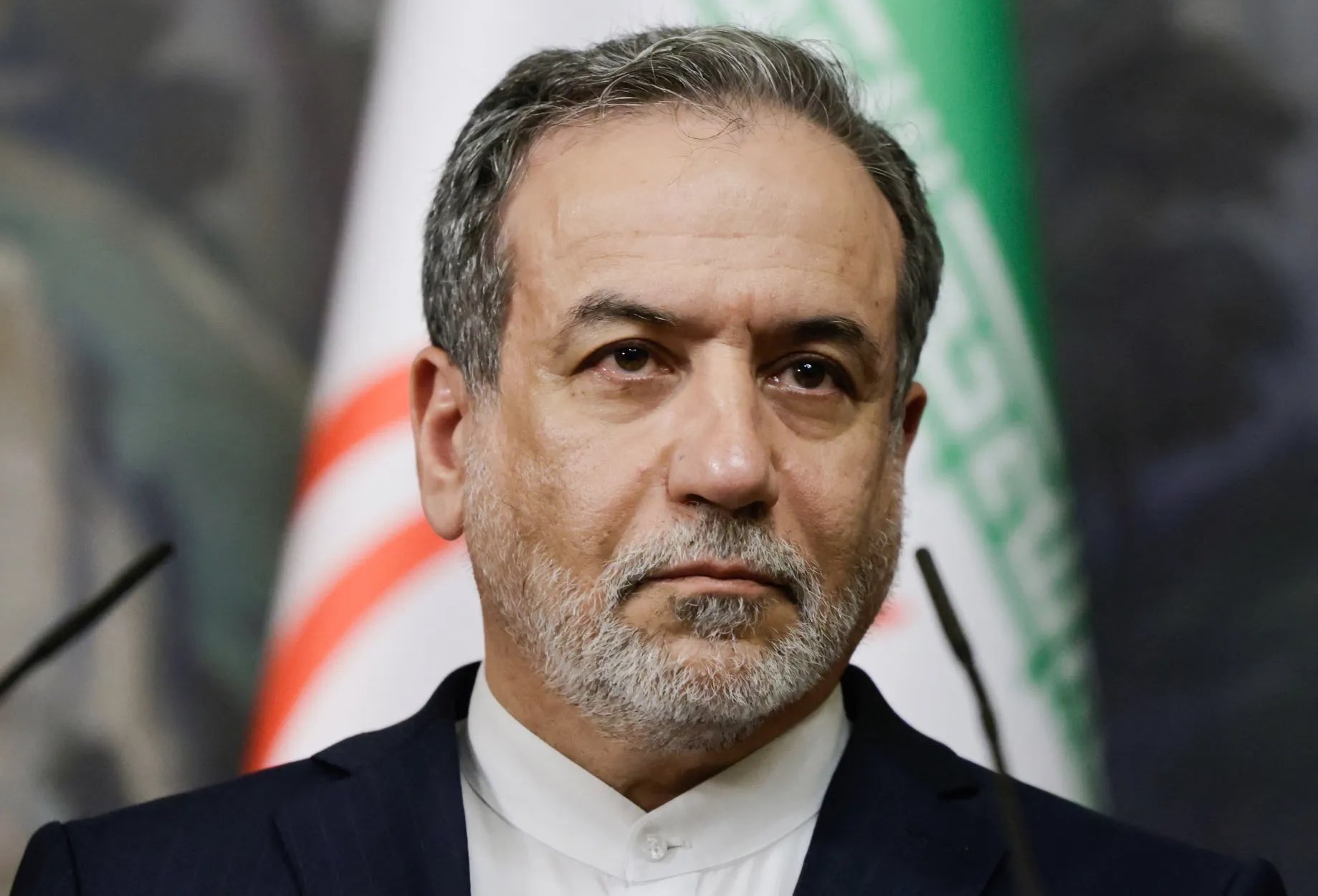
🚨 JUST IN 🇮🇷🇺🇸: “WE HAVE NO TRUST IN THE AMERICANS!” Iran’s Foreign Minister Abbas Araghchi Sends a Blunt Message to Washington as Tensions Continue to Rise! 🔥👀
💬 Can Iran and the United States ever rebuild trust? WHO DO YOU THINK MUST MAKE THE FIRST MOVE? 👇
📰 Full Article: Iran Says It Has No Trust in America as Diplomatic Tensions Continue
🚨 “WE HAVE NO TRUST IN THE AMERICANS!” 🇮🇷🇺🇸 Iran’s Foreign Minister Sends a Powerful Message to Washington
The relationship between Iran and the United States remains under intense pressure, and one of the biggest obstacles to resolving their differences is a serious lack of trust. Iranian Foreign Minister Abbas Araghchi has made that position clear, expressing deep skepticism about Washington and raising important questions about whether diplomacy can overcome years of hostility.
The message is powerful because relations between the two countries affect far more than the governments in Tehran and Washington. Their decisions can influence regional security, international trade, energy markets, and the stability of an already tense Middle East.
But here is the question many observers are asking: How can two countries reach a lasting agreement when one side says it does not trust the other?
🇮🇷 A Message Washington Cannot Easily Ignore
Araghchi’s statement, “We have no trust in the Americans,” reflects Tehran’s stated concerns about dealing with Washington.
For Iran, the issue of trust is closely connected to its experience with previous negotiations, sanctions, military confrontations, and disagreements over commitments made during diplomatic efforts.
Iranian officials have repeatedly argued that negotiations cannot succeed if agreements are not respected and if diplomatic engagement is accompanied by threats or military pressure.
From Tehran’s perspective, rebuilding confidence requires more than public statements. Iranian leaders want to see actions that demonstrate a willingness to address their concerns.
Washington, meanwhile, has its own demands and concerns regarding Iran’s policies, regional influence, and nuclear programme.
These competing priorities have made it difficult for both governments to find common ground.
The result is a complicated diplomatic situation in which even the possibility of negotiations can become controversial.
🇺🇸 Why Trust Has Become Such a Major Issue
Trust is one of the most important ingredients in international diplomacy.
When countries negotiate, they must believe that the other side has a genuine interest in reaching an agreement and will honour its commitments.
Without that confidence, even a promising diplomatic initiative can struggle to move forward.
Iran and the United States have spent decades confronting one another over major political and security issues. Sanctions, nuclear negotiations, military threats, and disagreements about regional security have repeatedly complicated their relationship.
Each new confrontation adds another layer of suspicion.
For Iranian officials, previous diplomatic setbacks have reinforced concerns about Washington’s intentions. For American officials, Iran’s actions and policies remain central to their own security calculations.
This creates a difficult cycle: each side points to the other as a reason for its lack of confidence.
Breaking that cycle requires both governments to decide whether the potential benefits of diplomacy outweigh the political costs of compromise.
That is much easier to say than to accomplish.
🌍 Why the World Is Paying Attention
The consequences of worsening US–Iran relations would not necessarily remain limited to the two countries.
The Middle East occupies a strategically important position in the global economy, particularly because of its role in international energy supplies and maritime transportation.
One area of particular concern is the Strait of Hormuz, a vital shipping route through which substantial volumes of the world’s oil and other energy supplies pass.
Any serious disruption to shipping in the region could affect energy prices, transportation costs, and businesses that depend on stable fuel supplies.
For countries that import oil, higher energy prices can increase pressure on household budgets and raise the cost of transporting goods.
For businesses, uncertainty can complicate investment decisions and increase operating expenses.
That is why developments involving Iran and the United States attract attention well beyond the Middle East.
Governments, investors, energy companies, and ordinary consumers all have reasons to monitor the relationship closely.
However, it is important to distinguish between a diplomatic statement and an actual escalation. A declaration of distrust does not automatically mean that military action or a breakdown in negotiations is inevitable.
🤝 Is Diplomacy Still Possible?
Despite the tension, a lack of trust does not necessarily make negotiations impossible.
In international relations, countries that disagree sharply can still negotiate when they believe that an agreement serves their interests.
The challenge is creating conditions under which both sides believe their concerns will be taken seriously.
For Iran and the United States, that could involve clear communication, realistic negotiating positions, verifiable commitments, and mechanisms for addressing disagreements.
Mediators may also help by providing channels through which proposals can be exchanged without requiring immediate public concessions.
However, progress would depend on the willingness of both governments to engage seriously.
Neither side can guarantee a successful outcome simply by demanding that the other change its position.
A lasting agreement would likely require difficult discussions about security, sanctions, nuclear activities, and the broader regional situation.
Even then, restoring confidence could take considerably longer than reaching an initial understanding.
The central question is whether both governments can find enough common ground to make continued diplomacy worthwhile.
🔥 What Happens If the Distrust Continues?
If the relationship remains confrontational, the risks could extend across several areas.
First, diplomatic channels could become more difficult to use, making misunderstandings harder to resolve.
Second, uncertainty could affect businesses and markets that are sensitive to developments in the Middle East.
Third, regional governments could face difficult decisions about their own security and diplomatic relationships.
Finally, the longer tensions continue, the harder it may become for political leaders to make compromises without facing criticism at home.
Nevertheless, the future is not predetermined.
Diplomatic relationships can change, and governments that once appeared firmly opposed can sometimes reach limited agreements when their interests align.
The challenge is preventing disagreements from developing into a more dangerous confrontation.
For that reason, Araghchi’s remarks should be understood as a reflection of the serious distrust affecting US–Iran relations, rather than proof that diplomacy has become impossible.
🌐 The Bigger Question: Who Should Make the First Move?
This is where the debate becomes particularly interesting.
Should Washington take the first step by addressing Iran’s concerns about previous negotiations and demonstrating that future commitments will be respected?
Or should Tehran take the initiative by offering concessions that could help rebuild confidence and address American concerns?
Some observers may argue that both governments must make simultaneous efforts because neither side can rebuild trust alone.
Others may believe that the country with the greater ability to change the current situation should take the initiative.
There is also the argument that the first step matters less than the quality of the actions that follow.
After all, a promising announcement means little if it is not followed by concrete measures.
Ultimately, any sustainable improvement in relations would require more than strong speeches or diplomatic photographs. It would require decisions that both sides could present as meaningful progress.
The real test will be whether Washington and Tehran can move beyond mutual suspicion and identify a practical path forward.
For now, the relationship remains complicated, and the possibility of meaningful progress depends on decisions that have yet to be made.
One thing is clear: when two influential countries struggle to trust each other, the consequences can reach far beyond their borders.
The world will be watching to see whether diplomacy can make progress despite the obstacles.
💬 YOUR TURN: LET’S DISCUSS!
🇮🇷 Iran says it has no trust in the Americans.
🇺🇸 The United States has its own concerns about Iran.
WHO SHOULD MAKE THE FIRST MOVE TO REBUILD TRUST — IRAN OR AMERICA?

🚨 BREAKING: TRUMP LAUNCHES $25 MILLION FRAUD-REPORTING PROGRAM AND REWARDS YOUTUBER $10,000 — BUT WHO DECIDES WHO GETS PAID?

JUST IN 🇮🇷🇺🇸: “WE HAVE NO TRUST IN THE AMERICANS!” Iran’s Foreign Minister Abbas Araghchi Sends a Blunt Message to Washington as Tensions Continue to Rise! 🔥👀

🚨🔥 JUST IN: TAYLOR SWIFT JUST CROSSED AN INCREDIBLE MILESTONE ON SPOTIFY! 👑🎶

🚨💔 BREAKING: NFL UMPIRE LARRY SMITH RULED OUT FOR THE REST OF THE 2026 SEASON AFTER HORRIFIC INJURY IN LONDON! 🏈😢

🚨🔥 JUST IN: JAY-Z REPORTEDLY PICKS HIMSELF FOR SUPER BOWL LXI HALFTIME SHOW — AND FANS ARE ALREADY TALKING! 👑🎤

🚨🎉 HAPPY BIRTHDAY TO THE KING OF THE BACKFIELD! 👑🏈 KENNETH WALKER III IS CELEBRATING HIS SPECIAL DAY! 🔥💙💚

🚨🌍 BREAKING: IRAN AND RUSSIA DRAW CLOSER AS ABBAS ARAGHCHI DECLARES HISTORIC TIES! 🇮🇷🇷🇺

🚨 BREAKING: TRUMP ADMITS HE WAS TESTING NATO — “WE DIDN’T NEED ANY HELP!” 🇺🇸🔥

🚨 JUST IN: NORTH KOREA RESPONDS TO KIM JONG UN DEATH RUMORS — NEW IMAGES SPARK GLOBAL REACTIONS! 🇰🇵👀

🚨🔥 BREAKING: JADEN MCDANIELS SECURES A MASSIVE $40 MILLION EXTENSION WITH THE MINNESOTA TIMBERWOLVES! 🐺💰

🚨🔥 NFL FANS, CHRISTIAN McCAFFREY IS BUILT DIFFERENT! THE 49ERS SUPERSTAR MAKES HISTORY WITH AN INCREDIBLE RUSHING AND RECEIVING MILESTONE! 🏈👑
